
What that white powder on your Homestead foundation walls actually means
Seeing white powder on your basement walls can be alarming. That chalky substance is likely efflorescence, a common but misunderstood issue in Homestead homes. This article explains what it is, why Pittsburgh’s soil and climate make it worse, and when it signals a bigger problem. Efflorescence on Concrete.
What is efflorescence and why is it showing up in your Homestead basement?
Efflorescence is a white, powdery deposit that forms when water moves through concrete or masonry and carries dissolved salts to the surface. As the water evaporates, it leaves behind those minerals. In Homestead, the problem often stems from Pittsburgh’s clay-heavy soil and frequent freeze-thaw cycles that push moisture against foundation walls. Who to call for emergency water removal in Pittsburgh right now.
The salts come from two sources: the concrete itself (calcium hydroxide from Portland cement) and groundwater minerals. When hydrostatic pressure builds against your foundation, water seeps through tiny pores in the concrete. As it evaporates on the interior surface, it leaves a visible white residue. Expert water damage restoration for businesses in the Pittsburgh Strip District.
Efflorescence vs. mold: The finger test that tells you what you’re dealing with
Many Homestead homeowners panic when they see white deposits, fearing toxic mold. Here’s how to tell the difference:
- Efflorescence dissolves in water and feels gritty when rubbed between fingers
- Mold smears when touched and may have a musty odor
A simple water drop test works too. Place a drop on the white substance. If it dissolves, it’s efflorescence. If it beads up, you likely have mold or another substance.

A close-up photo showing efflorescence on a Homestead basement wall with a water drop test in progress. Read more about How to spot mold growth in your basement home gym in Wilkins Township.
Why Homestead homes are especially vulnerable to efflorescence
Homestead’s location along the Monongahela River creates unique moisture challenges. The area sits on heavy clay soil that retains water, combined with Pittsburgh’s freeze-thaw cycles that cause concrete to expand and contract. This movement creates tiny pathways for water to enter foundation walls.
According to the USDA Soil Survey, Homestead sits on soil classified as the “Pittsburgh Red Beds,” a clay-rich formation that drains poorly. When heavy rains hit or snow melts rapidly, water has nowhere to go but against your foundation walls.
Local building code 305.1 of the Pennsylvania Uniform Construction Code requires proper drainage away from foundations, but many older Homestead homes predate these requirements. The result is hydrostatic pressure that forces water through concrete pores, carrying minerals to the surface. Pennsylvania Uniform Construction Code.
The science behind the white powder: Calcium hydroxide and capillary action
The white powder is primarily calcium carbonate, formed when calcium hydroxide from cement reacts with carbon dioxide in the air. This process, called carbonation, is accelerated when water is present.
Capillary action pulls water upward through concrete’s porous structure. In Homestead’s clay soil, this “stack effect” can draw water several feet above the water table. The water dissolves minerals along the way, depositing them as efflorescence when it reaches the surface and evaporates.
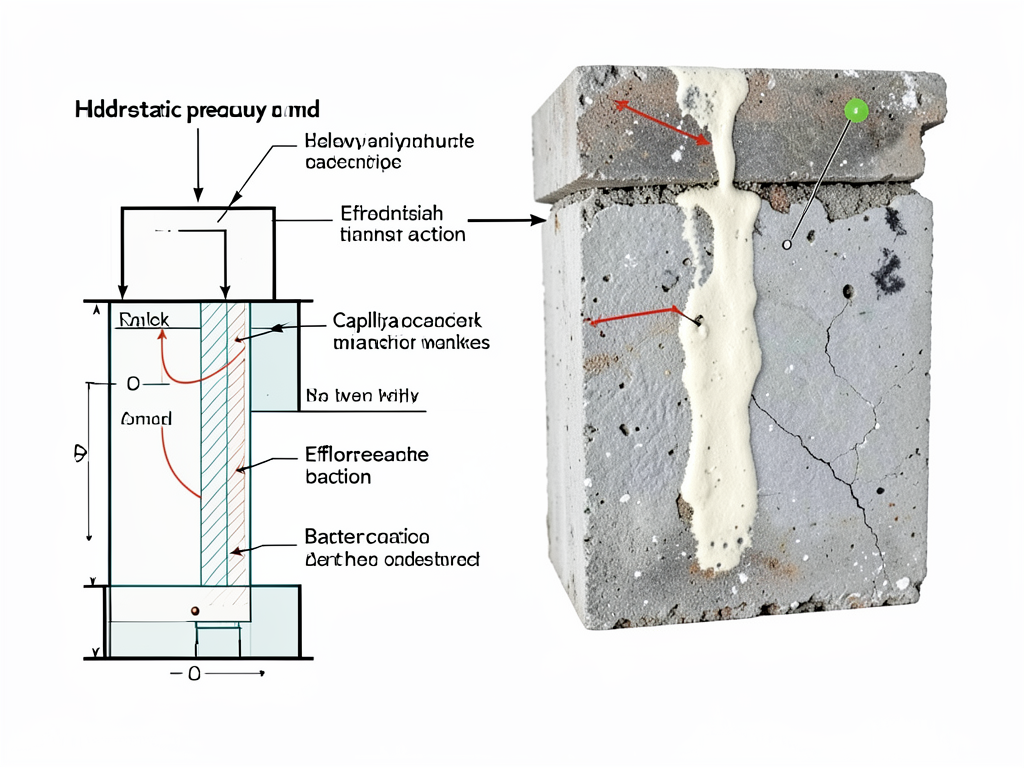
A technical diagram showing how capillary action and hydrostatic pressure work together to create efflorescence in basement walls
When efflorescence becomes a structural problem: Spalling and foundation damage
While efflorescence itself is harmless, it signals moisture problems that can lead to serious damage. The moisture that causes efflorescence can also lead to spalling, where concrete flakes or chips away due to freeze-thaw cycles and salt crystallization within the material.
Spalling creates pathways for more water infiltration, accelerating deterioration. In severe cases, you might see:
- Cracks widening over time
- Crumbling mortar joints
- Bulging or bowing walls
According to the International Masonry Institute, spalling can reduce a foundation’s load-bearing capacity by up to 40% if left unaddressed. That’s why efflorescence shouldn’t be ignored as merely cosmetic.
Cleaning efflorescence: What works and what doesn’t
For light efflorescence, homeowners can try:
- Brushing with a stiff nylon brush
- Wiping with a vinegar solution (5% acetic acid)
- Rinsing thoroughly and allowing walls to dry completely
Heavy deposits may require muriatic acid (diluted 1:10 with water), but this should only be applied by professionals wearing proper safety equipment. Pressure washing is another option, but it can force water deeper into the concrete if not done correctly.
Important: Cleaning alone won’t solve the underlying moisture problem. The efflorescence will return within months if water continues to penetrate the foundation. Cleaning up after a kitchen flood in your Fox Chapel home.
Permanent solutions for Homestead basements: Beyond surface cleaning
Stopping efflorescence requires addressing the moisture source. Common solutions include:
- Exterior waterproofing membranes applied to foundation walls
- French drains to redirect groundwater away from the foundation
- Sump pump installation with proper discharge piping
- Interior drainage systems for finished basements
For Homestead’s clay soil conditions, exterior solutions often provide the most reliable long-term results. The Pennsylvania DEP recommends maintaining at least 6 inches of fall in the grade within 10 feet of the foundation to prevent water pooling.
A before-and-after photo showing efflorescence removal and subsequent waterproofing installation in a Homestead basement
Local case study: A Homestead home’s efflorescence nightmare
Last winter, a homeowner on Ann Street in Homestead noticed white powder spreading across their basement walls. What started as a cosmetic concern revealed a serious moisture problem. Water was entering through a hairline crack in the foundation, exacerbated by poor exterior grading and clogged downspouts.
Our inspection found the basement walls were saturated, with efflorescence covering 80% of the surface area. The moisture had also created ideal conditions for mold growth behind finished wall panels. We implemented a comprehensive solution including crack injection, exterior waterproofing, and a new interior drainage system.
Six months later, the basement remains dry and the efflorescence has not returned. This case illustrates why professional assessment is crucial when you see persistent white powder on foundation walls.
Preventing efflorescence in your Homestead home
Prevention is more cost-effective than remediation. Here are steps Homestead homeowners can take:
- Clean gutters and downspouts regularly to ensure proper water diversion
- Extend downspouts at least 6 feet from the foundation
- Maintain proper grading with soil sloping away from the house
- Seal foundation cracks promptly with appropriate masonry sealant
- Install a dehumidifier to reduce indoor humidity levels
According to the EPA’s moisture control guidelines, keeping indoor humidity between 30-50% significantly reduces condensation on cool basement walls, which can contribute to efflorescence formation. EPA’s moisture control guidelines.
When to call a professional: Red flags that signal bigger problems
While light efflorescence is common in Homestead homes, certain signs warrant immediate professional attention:
- Efflorescence covering more than 25% of wall surface
- Cracks wider than 1/8 inch or showing horizontal movement
- Musty odors accompanying the white powder
- Water stains or actual moisture on walls
- Recent basement flooding or standing water
Professional assessment includes moisture meter readings, thermal imaging to detect hidden moisture patterns, and evaluation of hydrostatic pressure levels. These diagnostic tools reveal problems that aren’t visible to the naked eye.
Cost factors for efflorescence remediation in Homestead
Treatment costs vary widely based on the underlying cause and required solutions. Simple cleaning might cost $200-500, while comprehensive waterproofing systems range from $3,000 to $15,000 depending on basement size and required work.
Factors affecting cost include:
- Accessibility of foundation walls (excavation may be needed)
- Extent of existing damage
- Type of waterproofing system selected
- Local permit requirements in Homestead
Many homeowners insurance policies don’t cover efflorescence remediation, viewing it as a maintenance issue rather than sudden damage. However, if efflorescence results from a covered event like a burst pipe, related repairs might be covered.
Frequently Asked Questions
Is efflorescence dangerous to my health?
No. Efflorescence is simply mineral deposits and poses no direct health risk. However, the moisture causing efflorescence can lead to mold growth, which can cause respiratory issues.
How long does efflorescence take to form?
Efflorescence can appear within days of moisture exposure or take months to develop. In Homestead’s climate, seasonal freeze-thaw cycles often trigger its formation.
Can I paint over efflorescence?
Painting over efflorescence is not recommended. The moisture will continue to push through, causing paint to bubble and peel. Always address the moisture source first.
Does efflorescence mean my foundation is failing?
Not necessarily. Efflorescence indicates moisture penetration but doesn’t automatically mean structural failure. However, it should be evaluated to rule out more serious issues.
How can I tell if my efflorescence problem is getting worse?
Increasing coverage area, darkening of deposits, or the appearance of cracks alongside efflorescence are signs the problem is progressing.
Take action before minor efflorescence becomes major damage
White powder on your foundation walls is more than a cosmetic issue in Homestead’s challenging climate. It’s a warning sign that moisture is finding its way into your home’s structure. While cleaning can remove the visible deposits, only addressing the underlying moisture problem will provide lasting relief.
If you’re seeing efflorescence in your Homestead basement, don’t wait for it to spread or for more serious damage to develop. Our team provides free inspections to identify the source of moisture and recommend targeted solutions. We understand Homestead’s unique soil and weather challenges and can recommend solutions that work for your specific situation.
Call (412) 382-8788 today to schedule your free inspection. We’ll identify whether you’re dealing with simple efflorescence or a more serious moisture problem and provide a clear plan to protect your home’s foundation. Dealing with a flooded basement in Mount Lebanon without losing your mind.
{
“@context”: “https://schema.org”,
“@type”: “BlogPosting”,
“headline”: “What that white powder on your Homestead foundation walls actually means”,
“description”: “Found white powder on your Homestead basement walls? Learn if it’s dangerous efflorescence, how Pittsburgh’s clay soil causes it, and when to call for a free inspection.”,
“wordCount”: 1572,
“datePublished”: “2026-04-25T06:55:00.000Z”,
“dateModified”: “2026-04-25T06:55:00.000Z”,
“inLanguage”: “en-US”,
“mainEntityOfPage”: {
“@type”: “WebPage”,
“@id”: “https://reliancewaterdamagerestorationpittsburgh.com”
},
“publisher”: {
“@type”: “LocalBusiness”,
“name”: “Reliance Water Damage Restoration Pittsburgh”,
“url”: “https://reliancewaterdamagerestorationpittsburgh.com”
},
“author”: {
“@type”: “Organization”,
“name”: “Reliance Water Damage Restoration Pittsburgh”,
“url”: “https://reliancewaterdamagerestorationpittsburgh.com”
},
“image”: {
“@type”: “ImageObject”,
“url”: “https://reliancewaterdamagerestorationpittsburgh.com/wp-content/uploads/2026/03/what-that-white-powder-on-your-homestead-foundatio-1.png”
}
}
{
“@context”: “https://schema.org”,
“@type”: “LocalBusiness”,
“name”: “Reliance Water Damage Restoration Pittsburgh”,
“url”: “https://reliancewaterdamagerestorationpittsburgh.com”,
“address”: {
“@type”: “PostalAddress”,
“addressLocality”: “Pittsburgh”
},
“areaServed”: {
“@type”: “City”,
“name”: “Pittsburgh”
}
}
{
“@context”: “https://schema.org”,
“@type”: “FAQPage”,
“mainEntity”: [
{
“@type”: “Question”,
“name”: “What is efflorescence and why is it showing up in your Homestead basement?”,
“acceptedAnswer”: {
“@type”: “Answer”,
“text”: “Efflorescence is a white, powdery deposit that forms when water moves through concrete or masonry and carries dissolved salts to the surface. As the water evaporates, it leaves behind those minerals. In Homestead, the problem often stems from Pittsburgh’s clay-heavy soil and frequent freeze-thaw cycles that push moisture against foundation walls. Who to call for emergency water removal in Pittsburgh right now.”
}
},
{
“@type”: “Question”,
“name”: “Is efflorescence dangerous to my health?”,
“acceptedAnswer”: {
“@type”: “Answer”,
“text”: “No. Efflorescence is simply mineral deposits and poses no direct health risk. However, the moisture causing efflorescence can lead to mold growth, which can cause respiratory issues.”
}
},
{
“@type”: “Question”,
“name”: “How long does efflorescence take to form?”,
“acceptedAnswer”: {
“@type”: “Answer”,
“text”: “Efflorescence can appear within days of moisture exposure or take months to develop. In Homestead’s climate, seasonal freeze-thaw cycles often trigger its formation.”
}
},
{
“@type”: “Question”,
“name”: “Can I paint over efflorescence?”,
“acceptedAnswer”: {
“@type”: “Answer”,
“text”: “Painting over efflorescence is not recommended. The moisture will continue to push through, causing paint to bubble and peel. Always address the moisture source first.”
}
},
{
“@type”: “Question”,
“name”: “Does efflorescence mean my foundation is failing?”,
“acceptedAnswer”: {
“@type”: “Answer”,
“text”: “Not necessarily. Efflorescence indicates moisture penetration but doesn’t automatically mean structural failure. However, it should be evaluated to rule out more serious issues.”
}
},
{
“@type”: “Question”,
“name”: “How can I tell if my efflorescence problem is getting worse?”,
“acceptedAnswer”: {
“@type”: “Answer”,
“text”: “Increasing coverage area, darkening of deposits, or the appearance of cracks alongside efflorescence are signs the problem is progressing.”
}
}
]
}
{
“@context”: “https://schema.org”,
“@type”: “BreadcrumbList”,
“itemListElement”: [
{
“@type”: “ListItem”,
“position”: 1,
“name”: “Home”,
“item”: “https://reliancewaterdamagerestorationpittsburgh.com”
},
{
“@type”: “ListItem”,
“position”: 2,
“name”: “Blog”,
“item”: “https://reliancewaterdamagerestorationpittsburgh.com/blog”
},
{
“@type”: “ListItem”,
“position”: 3,
“name”: “What that white powder on your Homestead foundation walls actually means”
}
]
}
{
“@context”: “https://schema.org”,
“@type”: “Service”,
“serviceType”: “Water Damage Restoration”,
“provider”: {
“@type”: “LocalBusiness”,
“name”: “Reliance Water Damage Restoration Pittsburgh”,
“url”: “https://reliancewaterdamagerestorationpittsburgh.com”
},
“areaServed”: {
“@type”: “City”,
“name”: “Pittsburgh”
},
“description”: “Found white powder on your Homestead basement walls? Learn if it’s dangerous efflorescence, how Pittsburgh’s clay soil causes it, and when to call for a free inspection.”
}