




Menu

Document Drying & Restoration in Pittsburgh | Minimize Business Downtime with Industrial-Grade Recovery

When water disasters threaten your critical business documents and archives, Reliance Water Damage Restoration Pittsburgh deploys vacuum freeze drying technology and controlled environment chambers to salvage water damaged records while your operations continue with minimal disruption.

Slider Image 1
Slider Image 2
Slider Image 3
Slider Image 4
Slider Image 5
Slider Image 7
Slider Image 8
Slider Image 9
Slider Image 10
Slider Image 11

Pittsburgh's Three River Flooding Patterns Put Business Records at Risk

Pittsburgh's unique geography at the confluence of the Allegheny, Monongahela, and Ohio Rivers creates persistent flood exposure for Downtown, Strip District, and North Shore business districts. The older commercial buildings that line Penn Avenue and Liberty Avenue feature basement storage areas that routinely flood during spring thaw events and heavy precipitation periods.

Your business records face a 72-hour critical window once water exposure occurs. Paper begins irreversible deterioration as cellulose fibers swell and inks bleed. Mold colonies establish within 48 hours in Pittsburgh's average 65 percent humidity conditions. Medical offices, legal firms, financial institutions, and municipal agencies store documents with compliance requirements that make loss unacceptable.

Water damaged records restoration requires immediate intervention and specialized equipment. Standard air drying creates warping, cockling, and adhesion between pages. Document recovery services must arrest microbial growth while preserving paper integrity and ink legibility. Archive drying services demand controlled temperature, humidity, and air circulation that prevent secondary damage during the recovery process.

Wet document salvage is not janitorial work. It requires understanding of paper composition, binding structures, and preservation chemistry. The facilities that house your contracts, patient files, legal pleadings, and financial records need professional document drying protocols that protect business continuity and regulatory compliance simultaneously.

Pittsburgh's Three River Flooding Patterns Put Business Records at Risk
Vacuum Freeze Drying Technology Stops Deterioration at the Molecular Level

Vacuum Freeze Drying Technology Stops Deterioration at the Molecular Level

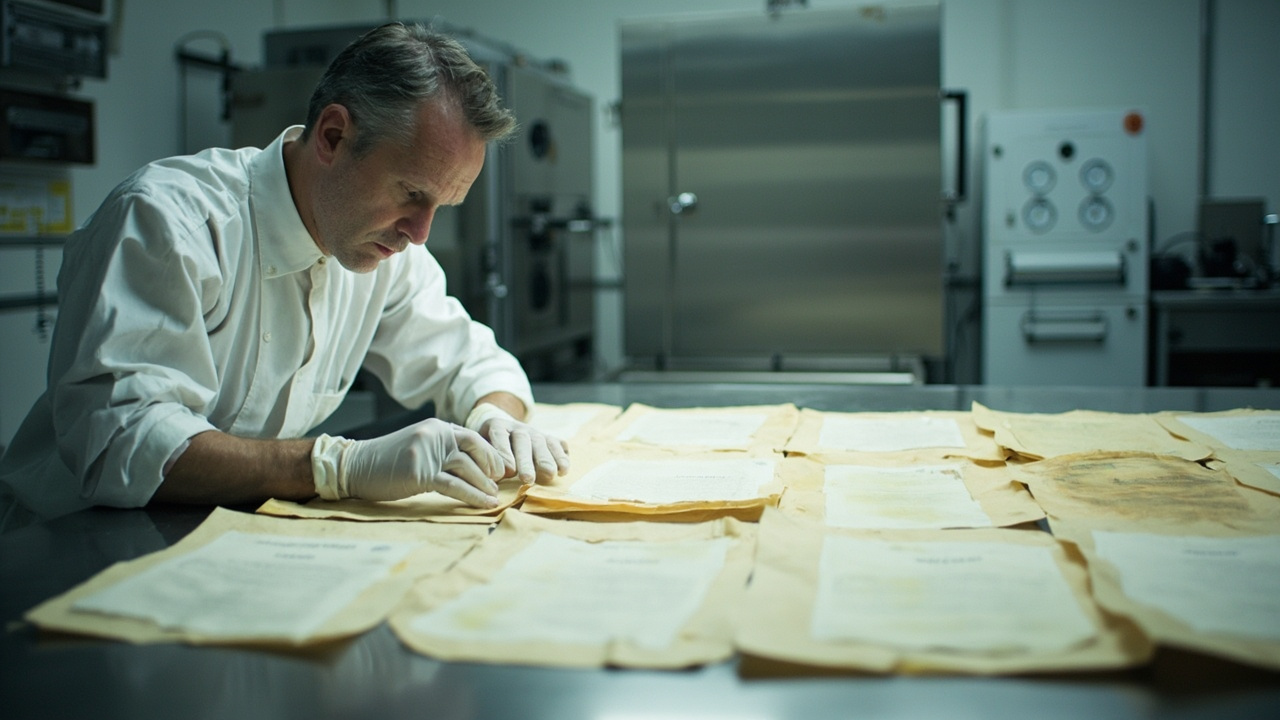
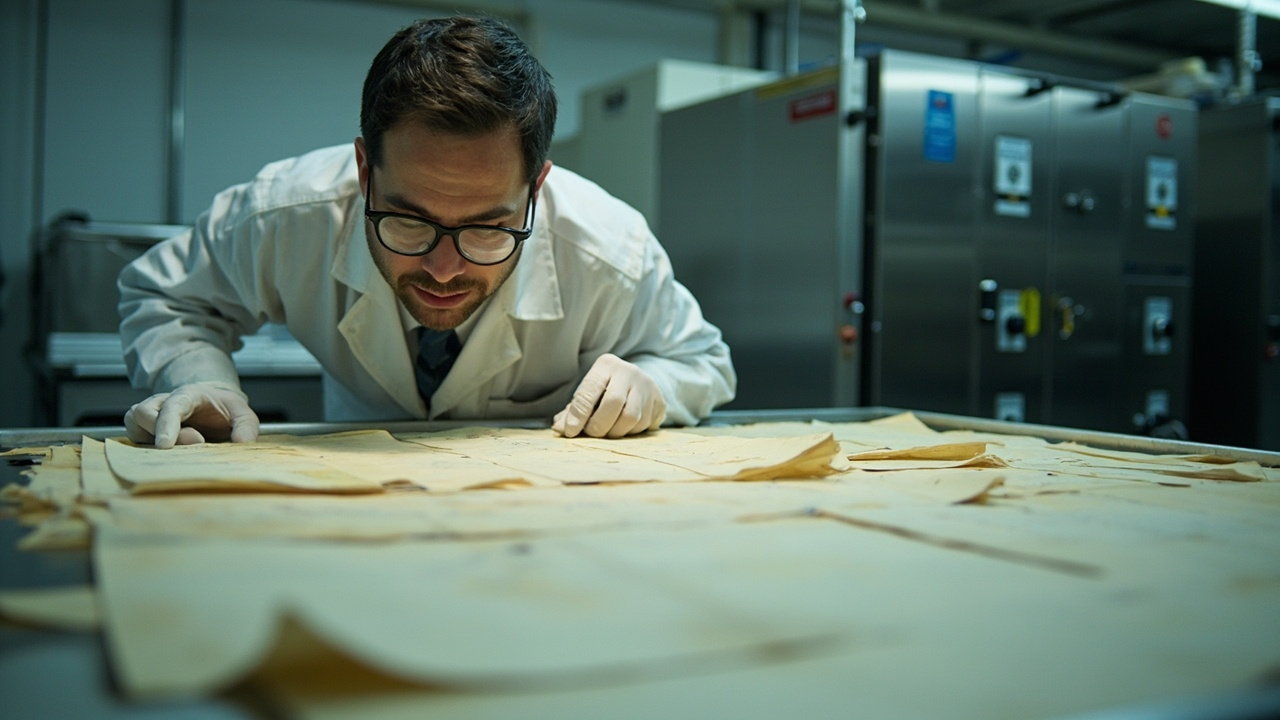
Reliance Water Damage Restoration Pittsburgh uses vacuum freeze drying documents technology to extract moisture through sublimation rather than evaporation. This process converts water directly from solid ice to vapor, bypassing the liquid phase that causes paper fiber distortion and ink migration.

The methodology begins with rapid freeze stabilization. We transport water damaged records in refrigerated conditions to prevent continued deterioration during transit. Documents enter vacuum chambers where temperatures drop to negative 40 degrees Fahrenheit. Pressure reduction inside the chamber allows ice crystals to vaporize without liquefying.

This approach preserves page separation, prevents adhesion, and maintains ink integrity across thermal papers, laser prints, and handwritten documents. Bound volumes retain structural integrity. Coated papers avoid the delamination that occurs with heat drying methods. Processing capacity handles 5,000 pounds of documents per cycle, accommodating large-scale losses from basement floods or sprinkler activations.

Post-drying treatment includes HEPA filtration to remove particulate contamination and antimicrobial application to prevent future mold growth. Documents return in stable condition for scanning, archiving, or continued physical storage.

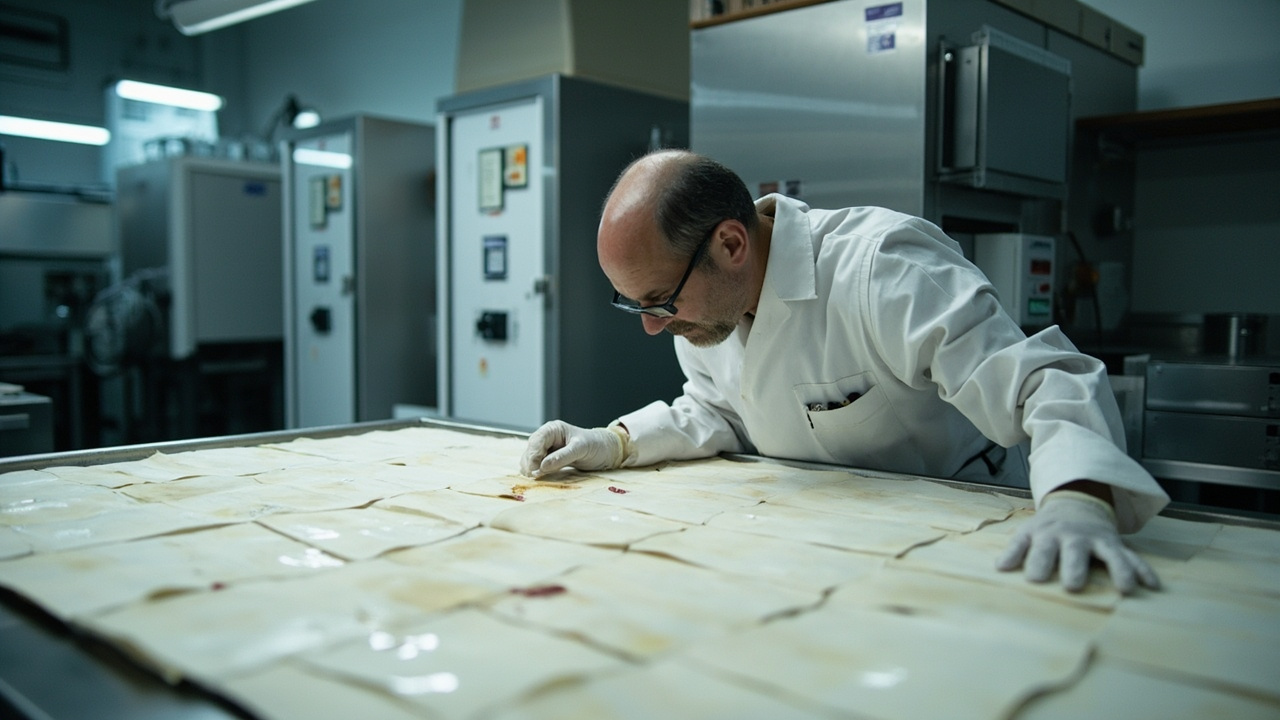
The alternative is permanent loss. Water damaged records that sit for 72 hours become unrecoverable. Standard drying creates block adhesion where individual pages fuse into solid masses. Vacuum freeze drying documents represents the only viable path for businesses facing regulatory retention requirements, ongoing litigation holds, or critical operational data stored in physical format.

How Commercial Document Recovery Works in Pittsburgh

Document Drying & Restoration in Pittsburgh | Minimize Business Downtime with Industrial-Grade Recovery
01

Emergency Stabilization Response

Our team arrives at your Pittsburgh facility within four hours of notification. We assess the volume of affected documents, contamination type, and priority classification. High-value records move into refrigerated transport immediately. We pack documents in wax-coated boxes to prevent additional moisture absorption during transit. Temperature drops to 35 degrees to halt microbial activity and slow deterioration chemistry until vacuum freeze processing begins.
02

Controlled Environment Processing

Documents enter our vacuum freeze drying chambers where pressure and temperature manipulation removes moisture through sublimation. Processing runs continuously for 7 to 14 days depending on paper density and saturation levels. We monitor internal document temperature and residual moisture content using calibrated sensors. This phase requires no handling, preventing mechanical damage that occurs with air drying or blotting methods common in amateur restoration attempts.
03

Quality Verification and Return

Dried documents undergo visual inspection for page separation, legibility retention, and structural integrity. We remove residual odor using activated carbon filtration and apply antimicrobial treatment to prevent future contamination. Documents return in archival-grade containers with detailed inventory documentation. You receive condition reports for insurance claims and compliance audits. Processing maintains chain of custody documentation required for legal records and medical files.

Pittsburgh Businesses Need Local Document Recovery Capacity

Downtown Pittsburgh's aging infrastructure creates recurring water intrusion events. The buildings constructed in the early 1900s along Smithfield Street and Grant Street lack modern waterproofing and drainage systems. Basement storage areas flood during heavy rain events when combined sewer systems overflow.

Law firms in the Grant Building, medical practices in the Oliver Building, and financial offices in the Frick Building store decades of physical records in below-grade areas. These documents hold litigation evidence, patient histories, and financial transactions that cannot be recreated. Pennsylvania retention laws require medical records maintained for seven years and legal files preserved for active case duration plus seven years.

Reliance Water Damage Restoration Pittsburgh maintains vacuum freeze drying capacity locally. Documents remain in the Pittsburgh metro area rather than shipping to regional facilities in Philadelphia or Columbus. This reduces transit time, maintains security chain of custody, and accelerates recovery timelines.

We understand local compliance requirements specific to Pennsylvania document retention laws and Pittsburgh municipal codes. Our team works directly with commercial property managers familiar with Point State Park flood patterns and North Shore drainage limitations.

Water damaged records restoration requires equipment investment that most restoration companies avoid. Vacuum freeze drying chambers cost between $300,000 and $500,000 per unit. The technical knowledge to operate this equipment requires specialized training in preservation science. Our local capacity means Pittsburgh businesses access professional archive drying services without delay, reducing business interruption and protecting regulatory compliance.

What Pittsburgh Business Owners Should Expect from Professional Document Recovery

Response Time and Processing Duration

We dispatch teams within four hours of your call to Pittsburgh locations. Initial stabilization occurs on-site the same day. Document transport to our processing facility happens within 24 hours. Vacuum freeze drying requires 7 to 14 days depending on document density, binding type, and saturation level. We provide daily status updates and adjust timelines based on your business continuity requirements. Rush processing accommodates litigation deadlines and regulatory audits. Processing continues 24 hours per day until completion.

Initial Assessment and Inventory Documentation

Our technicians photograph and catalog all documents before transport. You receive detailed inventory lists identifying box contents, location of origin, and condition assessment. We classify documents by priority based on your direction regarding critical files, time-sensitive materials, and compliance-required records. Chain of custody documentation maintains security protocols required for legal discovery materials and protected health information. Assessment includes contamination analysis to determine cleaning protocols and antimicrobial treatment needs before processing begins.

Recovery Success Rates and Quality Standards

Vacuum freeze drying achieves 85 to 95 percent content recovery when intervention occurs within 72 hours of water exposure. Documents return with readable text, separated pages, and structural integrity adequate for scanning or continued storage. Some cosmetic effects remain, including waviness in paper and minor discoloration. Ink legibility retention depends on original document type. Laser prints and typed documents show higher recovery rates than thermal fax papers and water-soluble inks. We provide condition reports documenting recovery outcomes for each processed batch.

Post-Recovery Support and Digitization Options

Recovered documents return in archival storage containers suitable for long-term preservation. We coordinate with document scanning services if you choose digitization to prevent future loss exposure. Post-processing antimicrobial treatment prevents mold growth during subsequent storage. We provide storage recommendations addressing humidity control and environmental conditions that protect recovered archives. Technical support continues after delivery to address questions about handling, storage, or additional preservation needs for your restored business records.

Frequently Asked Questions

You Have Questions,
We Have Answers

How Pittsburgh's Basement Storage Culture Creates Document Recovery Demand

Pittsburgh's commercial real estate market relies heavily on early 20th century construction where premium office space exists above street level while basement areas serve as record storage. The city's topography and river proximity make these below-grade spaces vulnerable to groundwater intrusion and flood events. Spring snowmelt combines with rain to overwhelm aging storm sewer infrastructure in neighborhoods from Shadyside to Lawrenceville. Businesses store decades of files in these high-risk areas because premium office space commands rates that make document storage economically impractical on upper floors.

Pennsylvania's document retention requirements create legal exposure when water events destroy business records. Medical practices must maintain patient files for seven years after final treatment. Legal firms face malpractice claims when case files deteriorate during storage. Financial institutions answer to federal regulators who audit transaction record preservation. Reliance Water Damage Restoration Pittsburgh serves as the regional resource for vacuum freeze drying capacity, eliminating the need to transport sensitive documents outside the metro area where chain of custody and security protocols become harder to maintain.
Water Damage Restoration Services in The Pittsburgh Area

While we provide rapid mobile service directly to your location, you can also find our physical business location on the map below. This map highlights our primary service area and shows our commitment to serving the Pittsburgh community. We are always ready to dispatch our expert team to your home or business, no matter where you are in our service region. Feel free to use the interactive map to get directions or to visualize our proximity to you.

Address:
Reliance Water Damage Restoration Pittsburgh, 201 S Craig St, Pittsburgh, PA, 15213

Additional Services We Offer

Our news updates

Latest Articles & News from The Blogs

How to tell if you have a expensive slab leak under your Franklin Park home Franklin Park homeowners face a…

How to tell if you have a expensive slab leak under your Franklin Park home

How to tell if you have a expensive slab leak under your Franklin Park home Franklin Park homeowners face a…

What to do when your office fire sprinklers go off by mistake in Downtown Pittsburgh

What to do when your office fire sprinklers go off by mistake in Downtown Pittsburgh When fire sprinklers discharge without…

Preserving the original masonry in Mexican War Streets homes after a water leak

Preserving the original masonry in Mexican War Streets homes after a water leak When water infiltrates the historic brick and…

Contact Us

Call Reliance Water Damage Restoration Pittsburgh at (412) 382-8788 now. Every hour of delay reduces recovery success rates for water damaged documents. Our vacuum freeze drying capacity handles large-scale losses while maintaining the chain of custody your business requires.