Expert water damage restoration for businesses in the Pittsburgh Strip District
When water floods your business in Pittsburgh’s Strip District, every minute counts. Standing water damages inventory, equipment, and structural elements while threatening your ability to serve customers. Commercial water damage requires specialized expertise that residential restoration companies often lack.. Read more about Restoring water damaged hardwood floors in Lawrenceville.
The Strip District presents unique challenges with its century-old warehouses converted to modern businesses, combined sewer overflow systems, and proximity to the Allegheny River. These factors create a perfect storm for water emergencies that demand immediate, professional response.. Read more about Getting a fair price for water damage restoration in Pittsburgh.
Our IICRC-certified technicians understand the Strip District’s specific vulnerabilities. We arrive within 60 minutes with commercial-grade extraction equipment, moisture meters, and industrial dehumidifiers designed for large-scale water events. We work around your business hours to minimize disruption while documenting every step for your insurance claim. IICRC certification.
Call (412) 382-8788 now for 24/7 emergency commercial water damage restoration in the Strip District. Don’t let water damage shut down your business operations.. Read more about Emergency water cleanup services for commercial properties in Downtown Pittsburgh.
Why Strip District businesses face unique water damage risks
The Strip District’s industrial heritage creates specific water damage vulnerabilities that other Pittsburgh neighborhoods don’t experience. Many buildings here were constructed between 1880 and 1920 using unreinforced masonry and porous brick foundations that absorb moisture like sponges.. Read more about Dealing with hidden water damage in older North Shore buildings.
Combined sewer overflow systems in the Strip District frequently back up during heavy rainfall. When storm drains and sanitary sewers share the same pipes, excess water overwhelms the system. This causes sewage to back up through floor drains and toilets, creating Category 3 black water contamination that requires specialized handling. Black Mold Symptoms.
The area’s proximity to the Allegheny River means businesses within three blocks of the shoreline face hydrostatic pressure risks. When river levels rise, groundwater pushes against basement walls and floors, forcing water through even the smallest cracks. This is especially problematic in buildings with below-grade storage or mechanical rooms.
Freeze-thaw cycles common to Pittsburgh’s climate create additional risks. Water seeps into foundation cracks during winter thaws, then expands when temperatures drop below freezing. This expansion widens cracks over time, eventually allowing significant water intrusion during spring rains.
Commercial water damage categories and their implications
Understanding water damage categories helps businesses make informed decisions during emergencies. Each category requires different handling procedures and safety protocols.
| Category | Source | Health Risk | Strip District Examples |
|---|---|---|---|
| Category 1 | Clean water from broken pipes or supply lines | Minimal | Busted sprinkler supply line in a converted warehouse |
| Category 2 | Grey water from washing machines, dishwashers | Moderate | Commercial dishwasher overflow in a restaurant |
| Category 3 | Black water from sewage, flooding, contamination | High | Combined sewer backup affecting multiple businesses |
Commercial restoration process for Strip District businesses
Our commercial restoration process follows industry standards while addressing the Strip District’s specific challenges. We coordinate with building management, coordinate with other tenants, and work within your operational constraints.
- Emergency Contact and Assessment
When you call (412) 382-8788, we dispatch a commercial specialist immediately. They assess the category of water, scope of damage, and potential hazards like asbestos in older buildings or electrical risks in active manufacturing spaces.
- Water Extraction and Containment
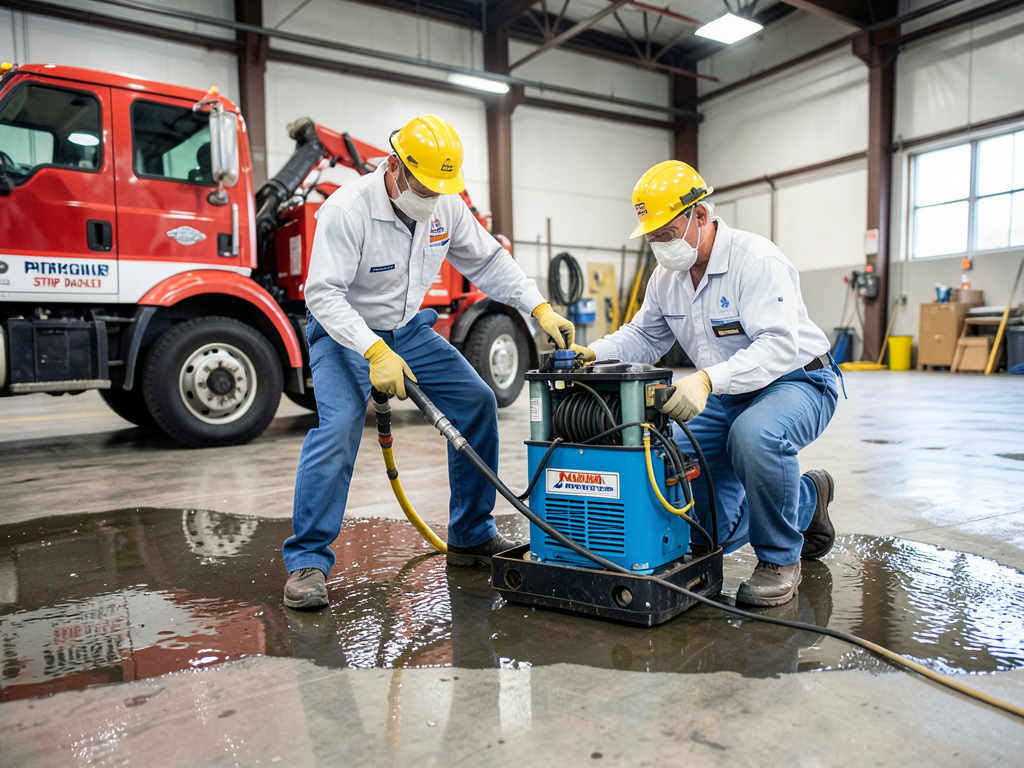
We deploy truck-mounted extraction units capable of removing thousands of gallons per hour. For Category 3 events, we establish containment zones using 6-mil polyethylene barriers to prevent cross-contamination between affected and unaffected areas.
- Demolition and Removal
Based on IICRC S500 standards, we remove unsalvageable materials including wet drywall, insulation, and flooring. In Strip District buildings, we often encounter lath-and-plaster walls that require careful removal to prevent asbestos exposure.
- Structural Drying
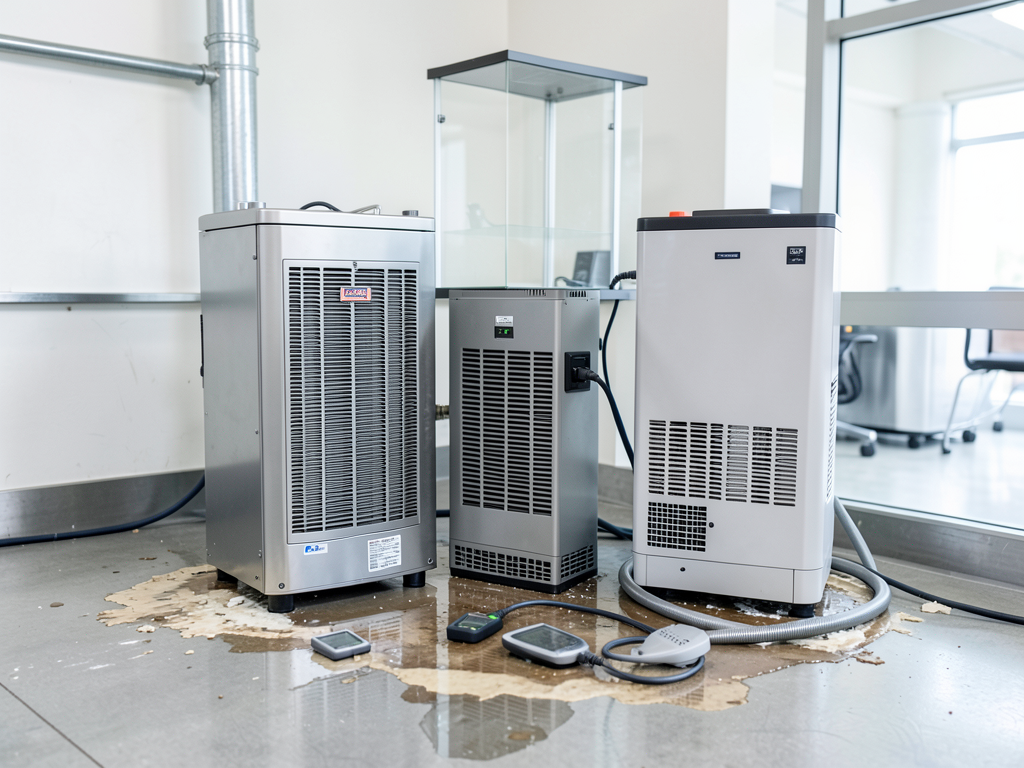
We install commercial dehumidifiers and air movers strategically to create optimal drying conditions. We monitor moisture levels daily using penetrating moisture meters to ensure wood framing reaches equilibrium moisture content below 16%.
- Cleaning and Sanitization
For Category 3 events, we apply EPA-registered disinfectants to all affected surfaces. We clean air handling systems using HEPA filtration to remove contaminants that could circulate through your building. EPA lead-safe certification.
- Reconstruction and Build-Back
We coordinate with licensed contractors to rebuild damaged areas using moisture-resistant materials. We install new drywall, flooring, and fixtures while ensuring proper vapor barriers to prevent future moisture problems.
Strip District commercial water damage case studies
A wholesale food distributor on Smallman Street experienced a Category 3 sewage backup affecting 8,000 square feet of warehouse space. The backup occurred during a heavy rainstorm when the combined sewer system exceeded capacity. Our team arrived within 45 minutes, established containment zones, and extracted 2,500 gallons of contaminated water. We completed the restoration in 96 hours, allowing the business to resume operations with minimal inventory loss.
A tech startup in a converted brewery building suffered Category 1 water damage when a rooftop HVAC unit froze and burst during a January cold snap. The water traveled through four floors, damaging sensitive electronic equipment. We used desiccant dehumidifiers to maintain relative humidity below 40% and salvaged 85% of the equipment through rapid response and specialized drying techniques. High Indoor Humidity Levels.
A restaurant on Penn Avenue experienced Category 2 water damage when a commercial dishwasher supply line failed during dinner service. The water spread through the dining area and into the basement storage. We worked overnight to extract water, sanitize surfaces, and restore the restaurant to operation by morning service.
Preventing water damage in Strip District commercial properties
Proactive measures can significantly reduce your risk of water damage. Many Strip District business owners don’t realize their buildings have specific vulnerabilities until disaster strikes.
Inspect your building’s foundation quarterly for cracks or signs of water infiltration. Look for efflorescence on concrete walls, which indicates water is seeping through masonry. This white, powdery substance forms when water evaporates and leaves mineral deposits behind. Efflorescence on Concrete.
Check your roof drainage system regularly. The Strip District’s many converted warehouses often have flat or low-slope roofs that pond water. Ensure gutters and downspouts are clear and direct water at least six feet away from your foundation.
Test your sump pump system before rainy seasons. Many Strip District buildings rely on sump pumps to manage groundwater, but pumps fail when power outages occur during storms. Consider installing a battery backup system to maintain protection during electrical failures.
Install water detection sensors in high-risk areas like mechanical rooms, basements, and near major appliances. Modern sensors can send alerts to your phone when they detect moisture, allowing you to respond before significant damage occurs.
Insurance considerations for Strip District businesses
Commercial property insurance policies vary widely in their water damage coverage. Understanding your policy before an emergency occurs can save you thousands in out-of-pocket expenses. Does Insurance Cover Mold?.
Most standard commercial policies cover sudden and accidental water damage from burst pipes or appliance failures. However, they typically exclude flood damage and gradual water intrusion. Flood damage requires separate National Flood Insurance Program coverage, which is crucial for businesses near the Allegheny River.
Business interruption insurance can be as important as property coverage. When water damage forces you to close temporarily, this coverage helps pay for lost income and operating expenses. Without it, a two-week closure could devastate your cash flow.
Document your building’s pre-loss condition with photos and videos. This documentation proves the value of your contents and helps resolve disputes with insurance adjusters. Keep records of recent repairs, maintenance, and upgrades that demonstrate your commitment to property upkeep.
Work with restoration companies that understand insurance processes. We document damage using industry-standard software that insurance companies recognize. Our detailed reports include moisture readings, photos, and scope of work that support your claim and expedite payment.
Specialized equipment for commercial water damage
Commercial water damage restoration requires industrial-grade equipment that residential companies don’t own. The scale and complexity of commercial projects demand specialized tools and techniques. Large Scale Water Extraction.
Truck-mounted extraction units can remove water at rates up to 2,000 gallons per minute. These units provide superior suction compared to portable extractors and can handle large-scale flooding in warehouses and retail spaces.
Desiccant dehumidifiers work differently than conventional units. They use silica gel to absorb moisture from the air, making them ideal for cold environments where refrigerant dehumidifiers lose efficiency. These units can reduce humidity to 10% relative humidity, accelerating drying in large commercial spaces.
Air movers create high-velocity airflow across wet surfaces, evaporating moisture 10 times faster than natural drying. We calculate the exact number needed based on cubic feet of space and use different models for different applications, from floor drying to cavity drying.
Thermal imaging cameras detect moisture hidden behind walls and under floors without destructive testing. These cameras identify temperature differences caused by evaporating moisture, allowing us to target drying efforts precisely and minimize unnecessary demolition.
Compliance and safety in commercial restoration
Commercial water damage restoration must comply with multiple regulations that don’t apply to residential work. These requirements protect workers, occupants, and the public while ensuring proper handling of hazardous materials.
Pennsylvania’s Uniform Construction Code requires licensed contractors for structural repairs exceeding $500. This means restoration companies must coordinate with licensed builders for reconstruction work, ensuring all repairs meet current building standards.
EPA regulations govern handling of lead-based paint in buildings constructed before 1978. Many Strip District buildings qualify, requiring lead-safe work practices including containment, personal protective equipment, and proper disposal of contaminated materials.
OSHA safety standards require specific protocols for confined spaces, electrical hazards, and chemical exposure. Our technicians receive annual training on these standards and use appropriate personal protective equipment for each hazard class encountered.
ADA compliance must be maintained during restoration. We ensure temporary pathways and restored areas meet accessibility requirements, preventing liability issues and maintaining compliance with federal regulations.
Cost factors for commercial water damage restoration
Commercial water damage restoration costs vary based on multiple factors. Understanding these variables helps businesses budget for potential emergencies and evaluate restoration proposals.
Category of water significantly impacts cost. Category 1 clean water damage typically costs $3-5 per square foot to restore, while Category 3 black water damage can exceed $10 per square foot due to specialized cleaning, disposal, and safety requirements.
Building construction type affects restoration complexity. Open warehouse spaces with concrete floors cost less to restore than buildings with multiple floors, finished interiors, and sensitive equipment. Strip District’s mix of old and new construction creates varying cost scenarios.
Response time directly correlates with restoration costs. Water left standing for more than 48 hours can cause secondary damage like mold growth, increasing restoration costs by 50-100%. Rapid response minimizes damage and reduces overall expenses.
Business interruption costs often exceed restoration expenses. A restaurant closed for one week can lose $10,000-50,000 in revenue, while a manufacturing facility might lose hundreds of thousands in lost production. Our priority is getting you back to operation as quickly as possible.
Frequently Asked Questions
How quickly should I respond to commercial water damage?
Within the first hour, water spreads through capillary action and begins damaging materials. Within 24 hours, mold can start growing. Call (412) 382-8788 immediately for 24/7 emergency response in the Strip District.
Will my business insurance cover water damage?
Most commercial policies cover sudden and accidental water damage but exclude flood and gradual damage. Review your policy or call us for a free insurance consultation to understand your coverage.
How long does commercial water damage restoration take?
Timeline depends on damage extent and category. Clean water damage in a single room might take 3-5 days, while Category 3 events affecting multiple floors can require 2-3 weeks. We provide detailed timelines after initial assessment.
Can I stay open during restoration?
Sometimes yes, depending on damage location and type. We can often isolate affected areas and maintain operations in unaffected portions of your building. We’ll work with you to minimize disruption while ensuring safety.
What certifications should a commercial restoration company have?
Look for IICRC certification, EPA lead-safe certification for pre-1978 buildings, and Pennsylvania contractor licensing. Our technicians maintain current certifications and follow industry standards for all restoration work.
Emergency commercial water damage response in the Strip District
When water threatens your Strip District business, you need more than just equipment. You need local expertise, rapid response, and proven processes that minimize downtime and protect your investment.
Our team understands the Strip District’s unique building stock, from early 20th-century warehouses to modern mixed-use developments. We know how water behaves in these structures and have the specialized equipment to handle any scale of commercial water damage.
We coordinate with building management, coordinate with other tenants, and work within your operational constraints. Our goal is restoring your business to full operation as quickly as possible while ensuring all work meets code requirements and insurance standards.
Don’t let water damage shut down your business operations. Call (412) 382-8788 now for immediate commercial water damage restoration in Pittsburgh’s Strip District. Our IICRC-certified technicians are ready to respond 24/7 with the equipment and expertise your business needs.
Choosing the right restoration partner
Not all restoration companies can handle commercial water damage effectively. Many residential-focused companies lack the equipment, expertise, and insurance coverage needed for large-scale commercial projects.
Commercial restoration requires understanding business continuity principles. We work after hours when possible, create phased restoration plans that allow partial operations, and prioritize critical areas like server rooms and cash registers.
Insurance documentation for commercial claims must be more detailed than residential work. We use Xactimate software and provide line-item estimates that insurance adjusters recognize, preventing delays and disputes over scope and pricing.
Commercial buildings often have specialized systems like computer room air conditioning, industrial kitchen equipment, and manufacturing machinery. We understand these systems and coordinate with your IT staff, kitchen managers, or production supervisors to protect sensitive equipment during restoration.
Strip District businesses deserve a restoration partner who understands local conditions, building codes, and the urgency of keeping doors open. We bring 15+ years of experience serving Pittsburgh businesses and have restored hundreds of commercial properties in the area.
Call (412) 382-8788 today to schedule your inspection or for immediate emergency response. Don’t wait until water damage forces your business to close. Be prepared with a restoration partner who understands your needs and responds when you need help most.
Conclusion
Water damage in your Strip District business isn’t just an inconvenience—it’s a threat to your livelihood. The combination of aging infrastructure, combined sewer systems, and proximity to the Allegheny River creates unique vulnerabilities that demand specialized expertise.
Rapid response makes the difference between a minor disruption and a major financial loss. Every hour of downtime costs money, and every day of water exposure causes more damage. Our 24/7 emergency response team understands this urgency and acts accordingly.
We bring commercial-grade equipment, IICRC-certified technicians, and deep knowledge of Pittsburgh’s building stock to every job. From initial assessment through final reconstruction, we handle every aspect of your restoration while coordinating with insurance companies and building management.
Don’t gamble with your business’s future. Call (412) 382-8788 now for expert commercial water damage restoration in Pittsburgh’s Strip District. We’re ready to respond whenever water threatens your business, protecting your property and your bottom line.
{
“@context”: “https://schema.org”,
“@type”: “BlogPosting”,
“headline”: “Expert water damage restoration for businesses in the Pittsburgh Strip District”,
“description”: “Fast commercial water damage restoration in Pittsburgh’s Strip District. 24/7 emergency response for businesses. Minimize downtime with IICRC-certified technicians. Call (412) 382-8788.”,
“wordCount”: 2488,
“datePublished”: “2026-02-18T11:58:00.000Z”,
“dateModified”: “2026-02-18T11:58:00.000Z”,
“inLanguage”: “en-US”,
“mainEntityOfPage”: {
“@type”: “WebPage”,
“@id”: “https://reliancewaterdamagerestorationpittsburgh.com”
},
“publisher”: {
“@type”: “LocalBusiness”,
“name”: “Reliance Water Damage Restoration Pittsburgh”,
“url”: “https://reliancewaterdamagerestorationpittsburgh.com”
},
“author”: {
“@type”: “Organization”,
“name”: “Reliance Water Damage Restoration Pittsburgh”,
“url”: “https://reliancewaterdamagerestorationpittsburgh.com”
},
“image”: {
“@type”: “ImageObject”,
“url”: “https://reliancewaterdamagerestorationpittsburgh.com/wp-content/uploads/2026/03/expert-water-damage-restoration-for-businesses-in-1.png”
}
}
{
“@context”: “https://schema.org”,
“@type”: “LocalBusiness”,
“name”: “Reliance Water Damage Restoration Pittsburgh”,
“url”: “https://reliancewaterdamagerestorationpittsburgh.com”,
“address”: {
“@type”: “PostalAddress”,
“addressLocality”: “Pittsburgh”
},
“areaServed”: {
“@type”: “City”,
“name”: “Pittsburgh”
}
}
{
“@context”: “https://schema.org”,
“@type”: “FAQPage”,
“mainEntity”: [
{
“@type”: “Question”,
“name”: “How quickly should I respond to commercial water damage?”,
“acceptedAnswer”: {
“@type”: “Answer”,
“text”: “Within the first hour, water spreads through capillary action and begins damaging materials. Within 24 hours, mold can start growing. Call (412) 382-8788 immediately for 24/7 emergency response in the Strip District.”
}
},
{
“@type”: “Question”,
“name”: “Will my business insurance cover water damage?”,
“acceptedAnswer”: {
“@type”: “Answer”,
“text”: “Most commercial policies cover sudden and accidental water damage but exclude flood and gradual damage. Review your policy or call us for a free insurance consultation to understand your coverage.”
}
},
{
“@type”: “Question”,
“name”: “How long does commercial water damage restoration take?”,
“acceptedAnswer”: {
“@type”: “Answer”,
“text”: “Timeline depends on damage extent and category. Clean water damage in a single room might take 3-5 days, while Category 3 events affecting multiple floors can require 2-3 weeks. We provide detailed timelines after initial assessment.”
}
},
{
“@type”: “Question”,
“name”: “Can I stay open during restoration?”,
“acceptedAnswer”: {
“@type”: “Answer”,
“text”: “Sometimes yes, depending on damage location and type. We can often isolate affected areas and maintain operations in unaffected portions of your building. We’ll work with you to minimize disruption while ensuring safety.”
}
},
{
“@type”: “Question”,
“name”: “What certifications should a commercial restoration company have?”,
“acceptedAnswer”: {
“@type”: “Answer”,
“text”: “Look for IICRC certification, EPA lead-safe certification for pre-1978 buildings, and Pennsylvania contractor licensing. Our technicians maintain current certifications and follow industry standards for all restoration work.”
}
}
]
}
{
“@context”: “https://schema.org”,
“@type”: “HowTo”,
“name”: “Commercial Water Damage Restoration Process”,
“step”: [
{
“@type”: “HowToStep”,
“position”: 1,
“name”: “Emergency Contact and Assessment”,
“text”: “When you call (412) 382-8788, we dispatch a commercial specialist immediately. They assess the category of water, scope of damage, and potential hazards like asbestos in older buildings or electrical risks in active manufacturing spaces.”
},
{
“@type”: “HowToStep”,
“position”: 2,
“name”: “Water Extraction and Containment”,
“text”: “We deploy truck-mounted extraction units capable of removing thousands of gallons per hour. For Category 3 events, we establish containment zones using 6-mil polyethylene barriers to prevent cross-contamination between affected and unaffected areas.”
},
{
“@type”: “HowToStep”,
“position”: 3,
“name”: “Demolition and Removal”,
“text”: “Based on IICRC S500 standards, we remove unsalvageable materials including wet drywall, insulation, and flooring. In Strip District buildings, we often encounter lath-and-plaster walls that require careful removal to prevent asbestos exposure.”
},
{
“@type”: “HowToStep”,
“position”: 4,
“name”: “Structural Drying”,
“text”: “We install commercial dehumidifiers and air movers strategically to create optimal drying conditions. We monitor moisture levels daily using penetrating moisture meters to ensure wood framing reaches equilibrium moisture content below 16%.”
},
{
“@type”: “HowToStep”,
“position”: 5,
“name”: “Cleaning and Sanitization”,
“text”: “For Category 3 events, we apply EPA-registered disinfectants to all affected surfaces. We clean air handling systems using HEPA filtration to remove contaminants that could circulate through your building. EPA lead-safe certification.”
},
{
“@type”: “HowToStep”,
“position”: 6,
“name”: “Reconstruction and Build-Back”,
“text”: “We coordinate with licensed contractors to rebuild damaged areas using moisture-resistant materials. We install new drywall, flooring, and fixtures while ensuring proper vapor barriers to prevent future moisture problems.”
}
],
“image”: “https://reliancewaterdamagerestorationpittsburgh.com/wp-content/uploads/2026/03/expert-water-damage-restoration-for-businesses-in-1.png”
}
{
“@context”: “https://schema.org”,
“@type”: “BreadcrumbList”,
“itemListElement”: [
{
“@type”: “ListItem”,
“position”: 1,
“name”: “Home”,
“item”: “https://reliancewaterdamagerestorationpittsburgh.com”
},
{
“@type”: “ListItem”,
“position”: 2,
“name”: “Blog”,
“item”: “https://reliancewaterdamagerestorationpittsburgh.com/blog”
},
{
“@type”: “ListItem”,
“position”: 3,
“name”: “Expert water damage restoration for businesses in the Pittsburgh Strip District”
}
]
}
{
“@context”: “https://schema.org”,
“@type”: “Service”,
“serviceType”: “Water Damage Restoration”,
“provider”: {
“@type”: “LocalBusiness”,
“name”: “Reliance Water Damage Restoration Pittsburgh”,
“url”: “https://reliancewaterdamagerestorationpittsburgh.com”
},
“areaServed”: {
“@type”: “City”,
“name”: “Pittsburgh”
},
“description”: “Fast commercial water damage restoration in Pittsburgh’s Strip District. 24/7 emergency response for businesses. Minimize downtime with IICRC-certified technicians. Call (412) 382-8788.”
}