



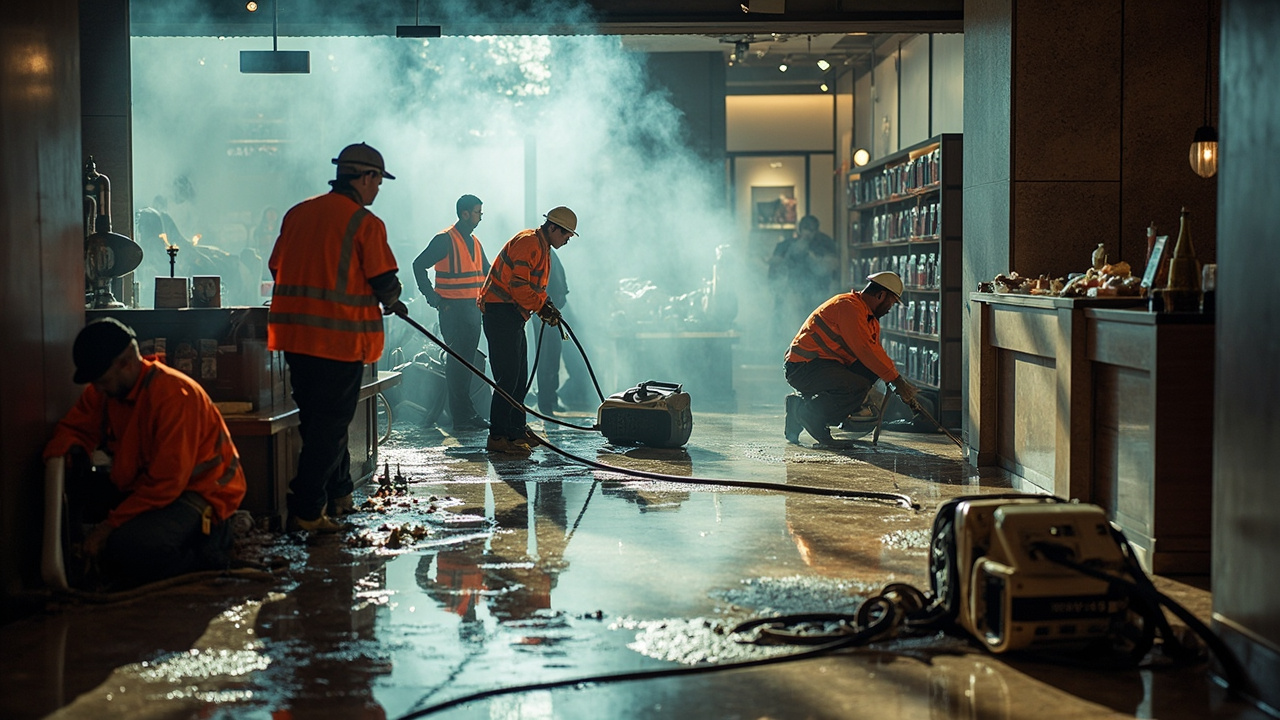

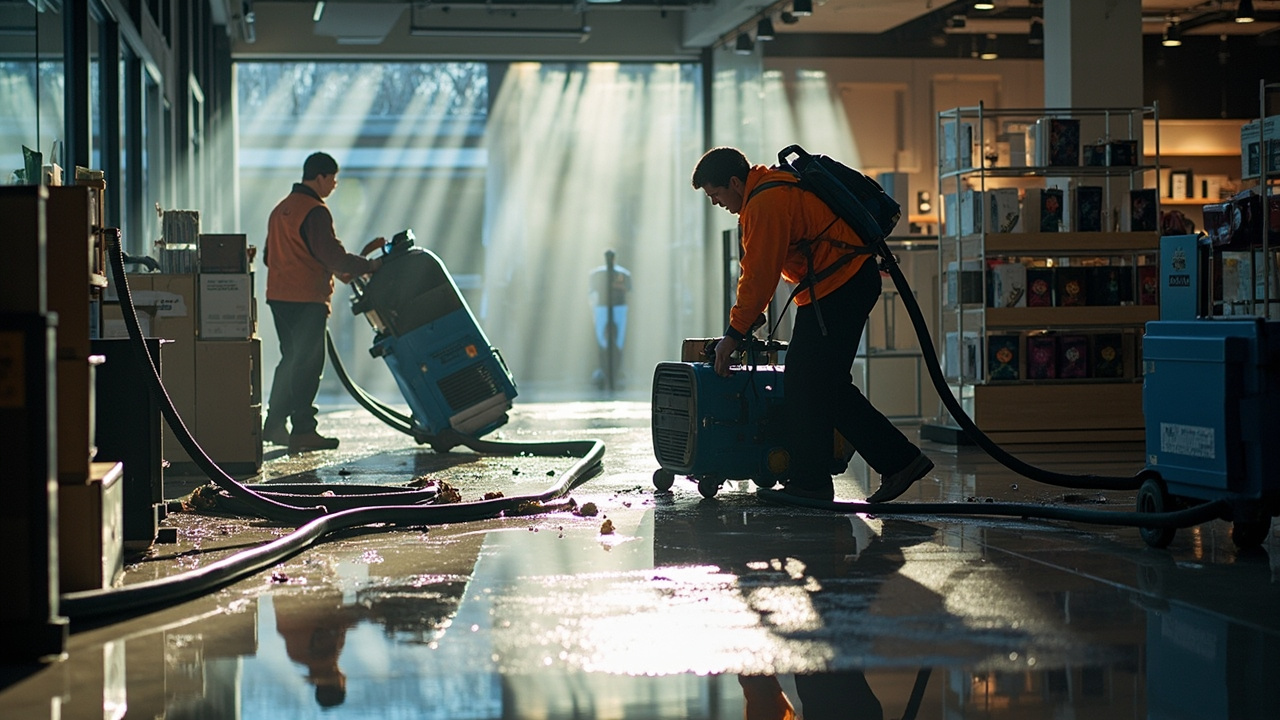
Pittsburgh's commercial retail corridors feature buildings constructed between 1880 and 1950, before modern waterproofing standards existed. Cast iron supply lines, clay tile drains, and brick foundation walls create elevated risk for water intrusion. The Strip District's wholesale buildings, Lawrenceville's converted factories, and Downtown's street-level retail spaces often lack proper foundation drainage or have compromised waterproofing from decades of deferred maintenance. Winter freeze-thaw cycles stress aged plumbing systems, causing failures during cold snaps when building heat cannot prevent pipe freezing in exterior walls or unheated basements. Retail water damage restoration in Pittsburgh requires familiarity with these older building systems and the specialized techniques needed to dry masonry and thick timber floor systems common in historic structures.
Commercial retail water extraction in Pittsburgh must account for the city's strict historic preservation requirements in designated districts. The Strip District, Lawrenceville, and Shadyside contain protected commercial corridors where exterior alterations require Historical Review Commission approval. Water damage affecting storefronts, transoms, or decorative masonry must be repaired using approved materials and methods. We work with restoration contractors familiar with these requirements and coordinate documentation for property owners navigating the approval process. Our familiarity with Allegheny County commercial building code and the city's Certificate of Occupancy requirements following water damage events helps retail operators maintain compliance and avoid penalties that could extend closure duration or create lease violations.