
Choosing Between Interior and Exterior Waterproofing for Your Castle Shannon Home
Water seeping into your basement in Castle Shannon creates immediate stress and long-term damage risks. The decision between interior and exterior waterproofing systems determines how effectively you stop moisture, protect your foundation, and preserve your home’s value. Pittsburgh’s clay-heavy soil and freeze-thaw cycles create unique challenges that affect which system performs best for your specific property. Who to call for emergency water removal in Pittsburgh right now.
Interior waterproofing uses drainage systems and sump pumps to manage water that enters your basement. Exterior waterproofing prevents water from reaching your foundation walls through excavation and membrane installation. Both methods work when properly installed, but the right choice depends on your home’s age, soil conditions, and budget constraints. Expert water damage restoration for businesses in the Pittsburgh Strip District.
Castle Shannon homes built before 1980 often have stone or cinder block foundations that react differently to moisture than modern poured concrete. The neighborhood’s hillside terrain means some properties face significant surface water runoff while others deal with hydrostatic pressure from below. Understanding these factors helps you make an informed decision before investing in waterproofing. Why your North Hills basement flooded and how to dry it out fast.
What is Interior Waterproofing? (Drainage Systems & Sump Pumps)
Interior waterproofing manages water after it enters your basement through a network of drainage channels, vapor barriers, and sump pump systems. The process involves cutting a channel around your basement perimeter, installing perforated drain pipe, and directing collected water to a sump pit where a pump removes it from your home. Cleaning up after a kitchen flood in your Fox Chapel home.
The system works by creating a controlled path for groundwater to follow. When hydrostatic pressure builds against your foundation walls, water enters through the drainage channel rather than pushing through cracks or porous concrete. A vapor barrier on the walls directs any moisture down to the drainage system. Efflorescence on Concrete.
Sump pumps provide the final removal step. Water collects in the sump pit until it reaches a trigger level, then the pump activates and discharges water through a discharge line away from your foundation. Most systems include battery backup to maintain operation during power outages.
Interior systems typically cost $35 to $50 per linear foot of basement perimeter. Installation requires breaking up concrete along the basement edges, installing the drainage components, then replacing the concrete. The process takes three to five days for an average home and causes minimal exterior disruption.. Read more about Why pests love your damp Sharpsburg basement more than you do.
Maintenance involves checking the sump pump quarterly, cleaning the intake screen, and testing the backup battery annually. Most systems last 15 to 20 years before components need replacement. The Pennsylvania Uniform Construction Code requires proper discharge routing to prevent water from returning to your foundation.
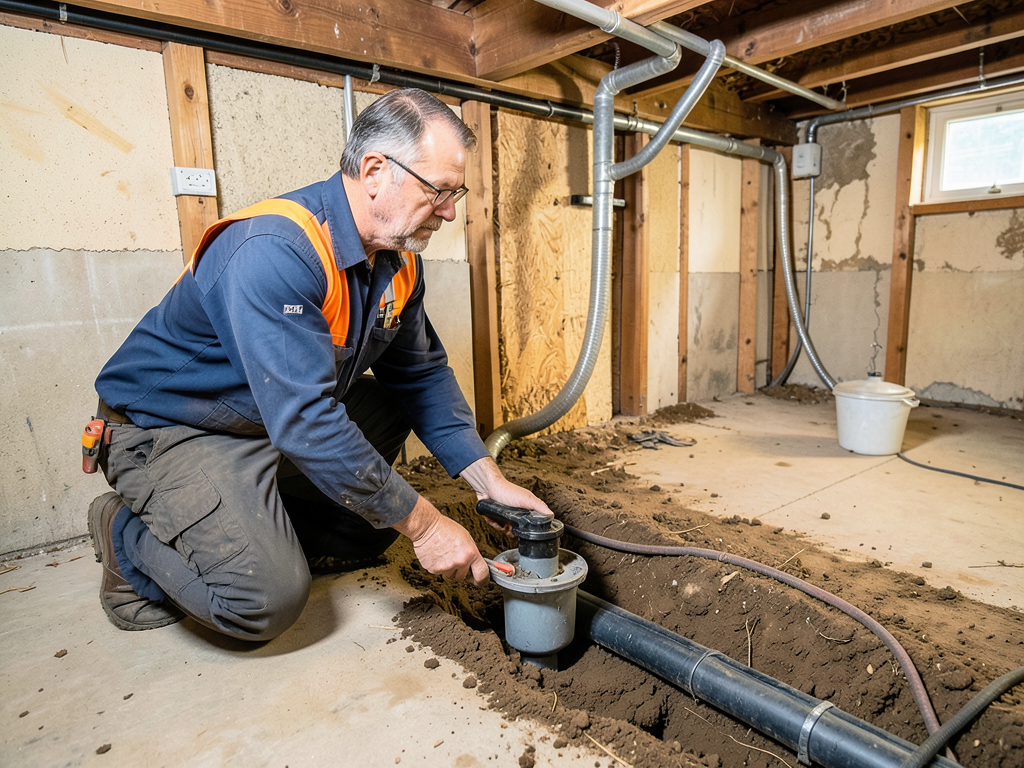
Diagram showing interior French drain installation with drainage channel, vapor barrier, and sump pump configuration.
What is Exterior Waterproofing? (The Excavation Method)
Exterior waterproofing stops water before it reaches your foundation walls through excavation, membrane application, and drainage board installation. The process involves digging a trench along your foundation exterior, cleaning the walls, applying waterproofing membrane, and installing drainage systems to direct water away from your home.
Excavation typically extends 6 to 8 feet below grade to expose the full foundation height. Workers clean the walls thoroughly, then apply a rubberized asphalt membrane or bentonite clay sheet that creates a waterproof barrier. A drainage board or dimpled plastic sheet protects the membrane and provides space for water to flow down to the footing drains.
Footing drains consist of perforated pipe installed along the foundation base, surrounded by gravel to filter water and prevent soil clogging. The system directs collected water to a storm sewer, dry well, or daylight discharge point away from your foundation.
Exterior systems cost $75 to $150 per linear foot due to excavation equipment, labor intensity, and material requirements. The process takes one to two weeks and requires heavy equipment access around your home. Landscaping, driveways, or patios near the foundation must be removed and replaced after installation.
Maintenance is minimal once installed. The membrane and drainage board typically last 25 to 30 years. Footing drains may need cleaning every 5 to 10 years if soil conditions cause clogging. The system provides comprehensive protection by addressing water at its source rather than managing it after entry.
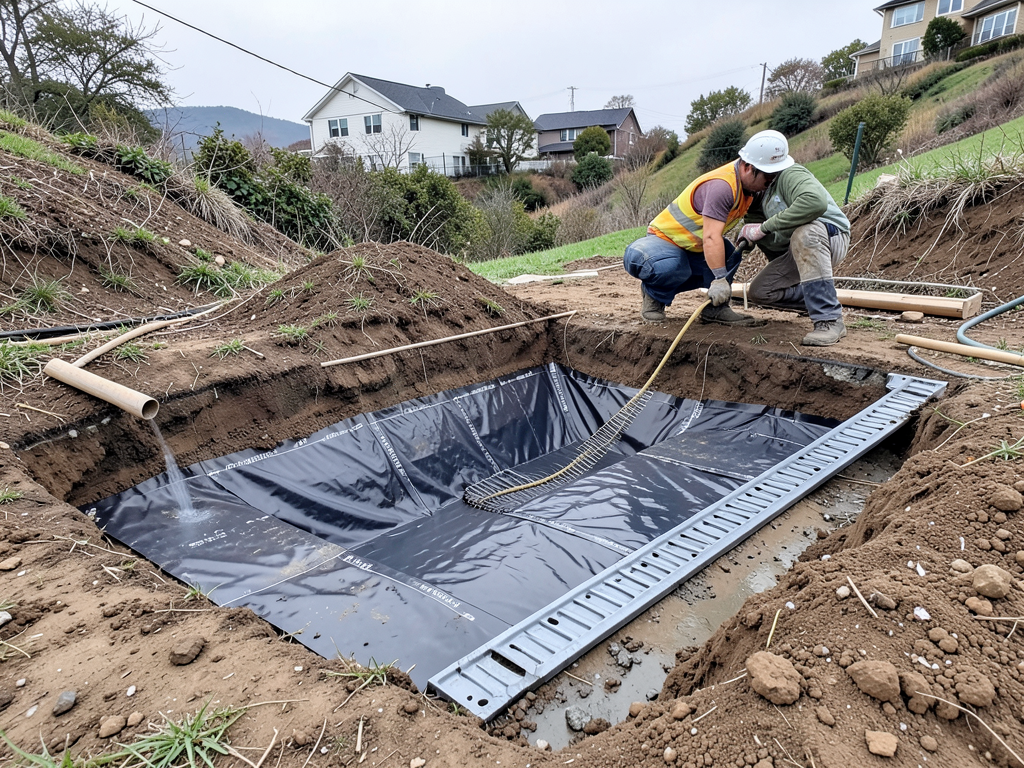
Photo showing exterior waterproofing excavation with membrane application and drainage board installation.
Key Differences: Cost, Durability, and Disruption
Cost represents the most significant difference between interior and exterior systems. Interior waterproofing costs $3,500 to $7,500 for an average 100-linear-foot basement, while exterior systems range from $7,500 to $15,000 for the same area. The price gap reflects excavation equipment, labor hours, and material requirements for exterior work.
Durability varies significantly between methods. Exterior waterproofing membranes and drainage boards last 25 to 30 years with minimal maintenance. Interior systems require more frequent attention, with sump pumps needing replacement every 5 to 7 years and drainage pipes potentially clogging over time. The Pennsylvania climate, with its freeze-thaw cycles, affects both systems differently.
Installation disruption impacts your daily life differently. Interior work stays inside your home, creating dust and noise but allowing you to remain in the house. Exterior excavation requires heavy equipment, creates significant noise, and may temporarily block driveway or yard access. Landscaping restoration adds time and cost to exterior projects.. Read more about Why road salt and snow melt are eating away at your Fox Chapel garage floor.
Effectiveness depends on your specific water problem. Exterior systems prevent water from touching your foundation walls, making them ideal for active leaks or high water table areas. Interior systems excel at managing minor seepage and humidity control but cannot stop water pressure against foundation walls. EPA mold information.
Warranty coverage often differs between methods. Exterior systems typically include longer warranties due to their durability and comprehensive protection. Interior systems may have shorter coverage periods but offer easier access for repairs if problems develop.
| Feature | Interior Waterproofing | Exterior Waterproofing |
|---|---|---|
| Average Cost per Linear Foot | $35 – $50 | $75 – $150 |
| Installation Time | 3-5 days | 1-2 weeks |
| Expected Lifespan | 15-20 years | 25-30 years |
| Disruption Level | Low (interior only) | High (excavation required) |
| Best For | Minor seepage, humidity control | Active leaks, high water table |
Why Pittsburgh’s Soil and Weather Matter for Your Foundation
Pittsburgh’s clay-heavy soil creates unique challenges for basement waterproofing. Clay soil expands when wet and contracts when dry, creating pressure cycles against foundation walls that can crack concrete or force water through mortar joints. This expansion pressure, combined with the region’s annual rainfall of 38 inches, creates conditions that overwhelm standard drainage systems.
The freeze-thaw cycles common in Western Pennsylvania accelerate foundation damage. Water trapped in small cracks expands when frozen, widening those cracks over time. This process, called frost wedging, can turn hairline cracks into significant water entry points within a few seasons. Castle Shannon’s elevation changes mean some homes face additional challenges from surface water runoff.. Read more about Common signs that your Pleasant Hills sump pump is about to quit on you.
Allegheny County’s hilly terrain affects how water moves around your home. Properties on slopes may experience significant surface water velocity during heavy rains, overwhelming standard footing drains. The combination of clay soil’s poor drainage and steep grades can create ponding against foundation walls even with proper grading.. Read more about Why the steep hills in Observatory Hill might be cracking your foundation.
Older homes in Castle Shannon often have stone or brick foundations that predate modern waterproofing standards. These materials are more porous than concrete and may have deteriorated mortar joints that allow water entry. The Pennsylvania Uniform Construction Code requires specific waterproofing methods for historic properties to maintain structural integrity while addressing moisture issues.
Seasonal factors influence system performance. Spring snowmelt combined with saturated ground can create hydrostatic pressure that forces water through foundation walls. Summer thunderstorms may overwhelm drainage systems if they cannot handle sudden volume increases. Understanding these patterns helps determine which waterproofing method provides adequate protection year-round.
Photo showing clay soil excavation with visible moisture content and drainage system installation.
When to Choose Interior vs. Exterior (Decision Matrix)
Choosing between interior and exterior waterproofing requires evaluating your specific conditions. Start by identifying your primary water entry points and the severity of your moisture problems. This diagnostic approach helps determine which system provides the most cost-effective solution.
Choose interior waterproofing when you experience minor seepage through foundation walls, notice humidity problems in your basement, or need a cost-effective solution for seasonal moisture issues. This method works well for homes with poured concrete foundations that have small cracks or for properties where exterior excavation is impractical due to landscaping or utilities.
Exterior waterproofing becomes necessary when you have active water entry during heavy rains, notice foundation wall cracks that leak consistently, or live in an area with a high water table. This method provides the most comprehensive protection by stopping water before it reaches your foundation walls.
Consider your home’s age and foundation type. Older stone or brick foundations often benefit more from exterior waterproofing due to their porous nature and potential mortar deterioration. Modern poured concrete foundations may respond well to interior systems if the primary issue is minor seepage rather than active leaks.
Budget constraints influence your decision. If exterior excavation would require removing expensive landscaping or patios, the total project cost may exceed your budget. Interior systems provide effective moisture control at a lower initial investment, though they may require more maintenance over time.
Property plans affect your choice. If you plan to finish your basement or use it for storage, exterior waterproofing provides the most reliable long-term protection. For unfinished basements used occasionally, interior systems may provide adequate moisture control at a lower cost.
Interior Waterproofing Best For:
- Minor basement seepage and humidity issues
- Homes with limited exterior access for excavation
- Budget-conscious homeowners seeking effective moisture control
- Properties with minor foundation cracks or porous concrete
- Seasonal moisture problems rather than active leaks
Exterior Waterproofing Best For:
- Active water entry during heavy rains
- Foundation wall cracks that leak consistently
- High water table areas or hillside properties
- Older homes with stone or brick foundations
- Long-term property value protection and basement finishing plans
Frequently Asked Questions
How long does waterproofing installation take?
Interior waterproofing typically requires 3 to 5 days for an average home. The process involves breaking concrete, installing drainage components, and replacing the concrete. Exterior waterproofing takes longer, usually 1 to 2 weeks, due to excavation, membrane application, and restoration work.
Will waterproofing increase my home’s value?
Professional waterproofing can increase your home’s value by 2% to 5% by eliminating moisture problems that deter buyers. In Pittsburgh’s competitive market, a dry basement provides a significant selling advantage. Exterior waterproofing typically offers better return on investment than interior systems due to its comprehensive protection.
Can I waterproof my basement myself?
DIY waterproofing often creates more problems than it solves. Professional installation ensures proper drainage slope, correct membrane application, and code-compliant discharge systems. Improper installation can void warranties and create liability issues if water damage occurs to neighboring properties.
How do I know if I need waterproofing?
Signs include visible water entry during rains, musty odors, efflorescence on walls, mold growth, or consistently damp basement floors. If you notice any of these issues, professional assessment can determine whether interior or exterior waterproofing provides the best solution.
What permits are required for waterproofing in Castle Shannon?
Allegheny County requires permits for exterior excavation and foundation work. Interior waterproofing typically needs permits only if it involves structural modifications. Professional waterproofing companies handle permit acquisition and ensure compliance with local building codes.
Call (412) 382-8788 Today to Schedule Your Inspection
Don’t let basement moisture problems worsen. The longer you wait, the more damage occurs to your foundation and the more expensive repairs become. Castle Shannon’s unique soil conditions and Pittsburgh’s climate create perfect conditions for basement water problems that only worsen over time.
Our team provides comprehensive waterproofing assessments that identify your specific moisture sources and recommend the most cost-effective solution. We handle both interior and exterior systems, ensuring you get the right method for your home’s needs rather than pushing a one-size-fits-all approach.
Pick up the phone and call (412) 382-8788 before the next heavy rain turns your basement into a swimming pool. We offer free inspections and can often provide same-week service for urgent moisture problems. Your foundation protects your entire home investment – don’t wait until water damage becomes catastrophic.
Call (412) 382-8788 now to speak with our waterproofing specialists about your Castle Shannon home. We’ll help you understand your options and create a plan that fits your budget and protects your property for years to come. For more information, visit IICRC standards.
{
“@context”: “https://schema.org”,
“@type”: “BlogPosting”,
“headline”: “Choosing Between Interior and Exterior Waterproofing for Your Castle Shannon Home”,
“description”: “Compare interior vs exterior waterproofing for Castle Shannon homes. Learn which method works best for Pittsburgh’s clay soil, freeze-thaw cycles, and hillside drainage.”,
“wordCount”: 2077,
“datePublished”: “2026-05-17T07:21:00.000Z”,
“dateModified”: “2026-05-17T07:21:00.000Z”,
“inLanguage”: “en-US”,
“mainEntityOfPage”: {
“@type”: “WebPage”,
“@id”: “https://reliancewaterdamagerestorationpittsburgh.com”
},
“publisher”: {
“@type”: “LocalBusiness”,
“name”: “Reliance Water Damage Restoration Pittsburgh”,
“url”: “https://reliancewaterdamagerestorationpittsburgh.com”
},
“author”: {
“@type”: “Organization”,
“name”: “Reliance Water Damage Restoration Pittsburgh”,
“url”: “https://reliancewaterdamagerestorationpittsburgh.com”
},
“image”: {
“@type”: “ImageObject”,
“url”: “https://reliancewaterdamagerestorationpittsburgh.com/wp-content/uploads/2026/03/choosing-between-interior-and-exterior-waterproofi-1.png”
}
}
{
“@context”: “https://schema.org”,
“@type”: “LocalBusiness”,
“name”: “Reliance Water Damage Restoration Pittsburgh”,
“url”: “https://reliancewaterdamagerestorationpittsburgh.com”,
“address”: {
“@type”: “PostalAddress”,
“addressLocality”: “Pittsburgh”
},
“areaServed”: {
“@type”: “City”,
“name”: “Pittsburgh”
}
}
{
“@context”: “https://schema.org”,
“@type”: “FAQPage”,
“mainEntity”: [
{
“@type”: “Question”,
“name”: “How long does waterproofing installation take?”,
“acceptedAnswer”: {
“@type”: “Answer”,
“text”: “Interior waterproofing typically requires 3 to 5 days for an average home. The process involves breaking concrete, installing drainage components, and replacing the concrete. Exterior waterproofing takes longer, usually 1 to 2 weeks, due to excavation, membrane application, and restoration work.”
}
},
{
“@type”: “Question”,
“name”: “Will waterproofing increase my home’s value?”,
“acceptedAnswer”: {
“@type”: “Answer”,
“text”: “Professional waterproofing can increase your home’s value by 2% to 5% by eliminating moisture problems that deter buyers. In Pittsburgh’s competitive market, a dry basement provides a significant selling advantage. Exterior waterproofing typically offers better return on investment than interior systems due to its comprehensive protection.”
}
},
{
“@type”: “Question”,
“name”: “Can I waterproof my basement myself?”,
“acceptedAnswer”: {
“@type”: “Answer”,
“text”: “DIY waterproofing often creates more problems than it solves. Professional installation ensures proper drainage slope, correct membrane application, and code-compliant discharge systems. Improper installation can void warranties and create liability issues if water damage occurs to neighboring properties.”
}
},
{
“@type”: “Question”,
“name”: “How do I know if I need waterproofing?”,
“acceptedAnswer”: {
“@type”: “Answer”,
“text”: “Signs include visible water entry during rains, musty odors, efflorescence on walls, mold growth, or consistently damp basement floors. If you notice any of these issues, professional assessment can determine whether interior or exterior waterproofing provides the best solution.”
}
},
{
“@type”: “Question”,
“name”: “What permits are required for waterproofing in Castle Shannon?”,
“acceptedAnswer”: {
“@type”: “Answer”,
“text”: “Allegheny County requires permits for exterior excavation and foundation work. Interior waterproofing typically needs permits only if it involves structural modifications. Professional waterproofing companies handle permit acquisition and ensure compliance with local building codes.”
}
}
]
}
{
“@context”: “https://schema.org”,
“@type”: “BreadcrumbList”,
“itemListElement”: [
{
“@type”: “ListItem”,
“position”: 1,
“name”: “Home”,
“item”: “https://reliancewaterdamagerestorationpittsburgh.com”
},
{
“@type”: “ListItem”,
“position”: 2,
“name”: “Blog”,
“item”: “https://reliancewaterdamagerestorationpittsburgh.com/blog”
},
{
“@type”: “ListItem”,
“position”: 3,
“name”: “Choosing Between Interior and Exterior Waterproofing for Your Castle Shannon Home”
}
]
}
{
“@context”: “https://schema.org”,
“@type”: “Service”,
“serviceType”: “Water Damage Restoration”,
“provider”: {
“@type”: “LocalBusiness”,
“name”: “Reliance Water Damage Restoration Pittsburgh”,
“url”: “https://reliancewaterdamagerestorationpittsburgh.com”
},
“areaServed”: {
“@type”: “City”,
“name”: “Pittsburgh”
},
“description”: “Compare interior vs exterior waterproofing for Castle Shannon homes. Learn which method works best for Pittsburgh’s clay soil, freeze-thaw cycles, and hillside drainage.”
}