How to Save Your Personal Library from Mold and Humidity in Squirrel Hill
Mold can destroy your books in as little as 24-48 hours when humidity stays above 60%. Pittsburgh’s humid summers and historic homes make Squirrel Hill basements and studies especially vulnerable. This guide shows you how to spot mold early, clean books safely, and control moisture before it ruins your collection.. Read more about Simple ways to measure the humidity in your Baldwin home without expensive tools.
Why Squirrel Hill Homes Face Special Mold Risks
Squirrel Hill’s century-old homes often sit on clay-heavy soil that traps moisture against basement walls. The neighborhood’s mature trees and dense canopy also reduce airflow around foundations. When summer humidity spikes above 70%, water vapor condenses on cool basement walls where many home libraries are stored. Who to call for emergency water removal in Pittsburgh right now.
Older homes in the 15217 and 15232 zip codes frequently lack modern vapor barriers. Without proper insulation, temperature swings between heated interiors and cold foundations create perfect conditions for condensation. The result is damp shelves where mold spores can germinate on paper in under two days.
Active Mold vs. Foxing: What You’re Really Seeing
Active mold appears as fuzzy patches in colors ranging from white to green to black. It spreads across pages and may have a musty odor. Foxing looks different. These are small brown spots caused by oxidation or metallic impurities in paper. Foxing doesn’t spread and poses no health risk. Black Mold Symptoms.
Testing is simple. Take a soft brush and gently touch the spot. Active mold will smear or transfer to the brush. Foxing remains fixed. If you see fuzzy growth or smell that characteristic musty odor, you have active mold that needs immediate attention.
Health Risks of Moldy Books
Mold releases microscopic spores and mycotoxins that can trigger respiratory problems. People with asthma, allergies, or compromised immune systems face the highest risk. Even healthy individuals may experience coughing, sneezing, or eye irritation when handling moldy books.
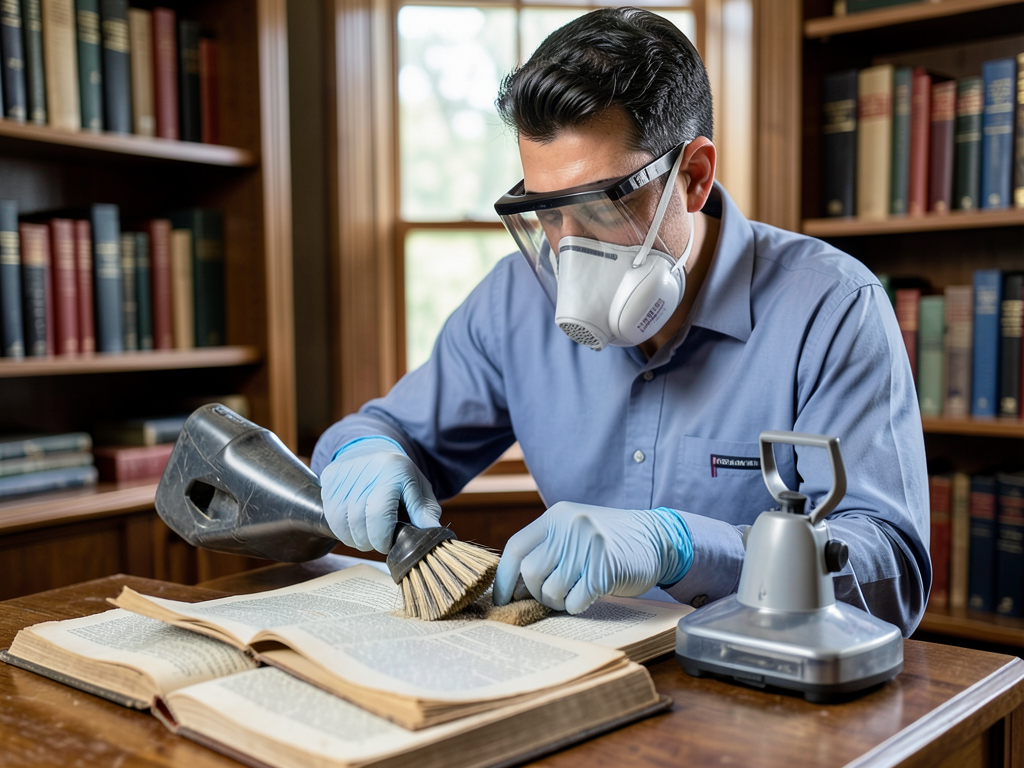
The danger increases in enclosed spaces like home libraries. Mold spores concentrate in stagnant air and can spread to other books or even your HVAC system. This is why proper PPE matters. Always wear an N95 respirator mask when handling moldy materials. Gloves protect your skin from both mold and cleaning chemicals.</p
DIY Cleaning for Minor Mold Damage
For small outbreaks on inexpensive books, you can attempt cleaning yourself. Start by isolating the affected books in a dry, well-ventilated area. Use a HEPA-filter vacuum with a soft brush attachment to remove loose spores. Work slowly to avoid damaging pages. EPA mold information.
Dry cleaning is safer than wet cleaning for paper. Use vinyl eraser crumbs to gently rub away surface mold. Never use household cleaners or bleach on books. These damage paper fibers and accelerate deterioration. For stubborn spots, a solution of 70% isopropyl alcohol can be carefully applied with a cotton swab. Cleaning up after a kitchen flood in your Fox Chapel home.
After cleaning, books need proper drying. Stand them upright with pages fanned out in front of a fan. Never use direct sunlight or heat sources. UV light and high temperatures cause irreversible paper damage.
When to Call a Pittsburgh Restoration Specialist
Professional help becomes necessary when mold affects valuable books, leather bindings, or when the infestation covers more than a few volumes. If you discover mold after a basement flood or notice a persistent musty smell throughout your library, the problem likely extends beyond surface cleaning.
Restoration specialists use industrial HEPA vacuums that capture 99.97% of particles down to 0.3 microns. They also employ freeze-drying technology that stops active mold growth and prevents further damage. This process, called sublimation, converts frozen moisture directly to vapor without the expansion that occurs during thawing.
Professionals can also identify and address the underlying moisture source. This might involve installing proper drainage, improving ventilation, or recommending humidity control systems specific to Pittsburgh’s climate.
Controlling Humidity in Pittsburgh Homes
The ideal environment for book storage maintains temperature between 60-70°F and relative humidity below 50%. Pittsburgh’s summer humidity often exceeds 70%, making active control necessary. A quality dehumidifier can remove 30-70 pints of moisture daily from a typical basement.
Place dehumidifiers away from walls to allow proper airflow. Empty collection tanks regularly or connect to a drain. Many modern units include humidity sensors that automatically maintain target levels. For larger collections, consider commercial-grade units that handle Pittsburgh’s humidity spikes more effectively. Large Scale Water Extraction.
Ventilation matters too. Use fans to circulate air and prevent stagnant pockets where moisture accumulates. During humid months, keep windows closed and rely on air conditioning. AC units naturally dehumidify as they cool.
Prevention: Long-Term Library Protection
Prevention starts with proper shelving. Keep books off basement floors and away from exterior walls where condensation forms. Use metal or sealed wood shelves rather than raw wood, which can absorb and release moisture.
Monitor humidity with a digital hygrometer. These inexpensive devices show real-time readings and often include temperature displays. Place them near your collection but away from direct heat sources or sunlight.
Regular inspection catches problems early. Check books monthly for signs of mold, especially during humid summer months. Look for warping, discoloration, or that telltale musty odor. Early detection means simpler, cheaper solutions.
Save vs. Toss: Making the Hard Decisions
Not every moldy book is worth saving. Mass-market paperbacks with extensive mold growth often cost more to restore than to replace. Rare books, family heirlooms, or volumes with sentimental value justify professional restoration.
Consider the book’s material. Modern glossy paper resists mold better than antique laid paper. Leather bindings require specialized care to prevent cracking during drying. Books with water damage often develop mold within 48 hours, making quick action critical. Expert water damage restoration for businesses in the Pittsburgh Strip District.
When in doubt, consult a professional. Many restoration services offer free assessments and can advise whether a book is salvageable or poses a health risk that warrants disposal.
Professional Document Recovery Services
Beyond books, professional services handle documents, photographs, and other paper items. They use specialized chambers that control temperature and humidity precisely. Some facilities offer gamma irradiation for severe mold cases, though this is typically reserved for items of significant value.
Document freeze-drying chambers can process hundreds of books simultaneously. This makes professional service cost-effective for larger collections. The process also eliminates odors and can remove many stains that DIY methods cannot address.
Professional restorers document their work thoroughly. This documentation helps with insurance claims and provides a record of your collection’s condition before and after restoration.
Squirrel Hill’s Unique Environmental Factors
Squirrel Hill’s proximity to Frick Park means homes face additional moisture challenges. Tree cover reduces sunlight that naturally dries foundations. The neighborhood’s rolling terrain also creates water flow patterns that direct runoff toward certain properties.
Many Squirrel Hill homes were built before modern building codes addressed moisture control. Fieldstone foundations common in the area are particularly prone to water infiltration. Even small cracks can allow significant moisture entry during Pittsburgh’s rainy seasons.
Local soil composition affects drainage. The clay-heavy soil prevalent in Squirrel Hill expands when wet, creating pressure against foundation walls. This pressure can cause cracks that worsen over time, creating new entry points for moisture.
Building Code Compliance for Mold Remediation
Pennsylvania follows the International Building Code with local amendments. Pittsburgh requires specific containment procedures for mold remediation affecting areas larger than 10 square feet. This includes sealing off work areas and using HEPA filtration to prevent spore spread.
The EPA mandates N95 respirators for anyone disturbing moldy materials. For commercial properties, OSHA regulations require more extensive PPE and air quality monitoring. These standards ensure both worker and occupant safety during remediation.
Professional restoration companies maintain IICRC certification, following S520 standards for mold remediation. This ensures work meets industry best practices and local regulatory requirements. IICRC S520 standards.
Cost Factors for Library Restoration
DIY cleaning costs mainly your time and basic supplies. Professional restoration pricing depends on several factors. Book value, extent of damage, and required treatments all affect cost. Simple surface cleaning might cost $10-25 per book, while extensive restoration of rare volumes can exceed $100 each.
Freeze-drying services typically charge by volume or linear foot of material. A standard banker’s box of documents might cost $50-100 to process. Larger collections benefit from volume discounts.
Insurance may cover restoration if damage results from a covered peril like water damage from a burst pipe. Document the damage thoroughly with photos before beginning any cleanup.
Emergency Response: What to Do First
When you discover mold, immediate action prevents further damage. Isolate affected books in plastic bags to prevent spore spread. Move them to a dry area with good ventilation. Do not attempt to clean wet books, as this can smear mold and cause staining.
Address the moisture source immediately. Fix leaks, improve drainage, or adjust humidity controls. Without solving the underlying problem, mold will return even after cleaning.
For valuable collections, professional assessment within 24-48 hours can mean the difference between salvage and total loss. Quick response limits damage and reduces restoration costs.
Creating a Mold-Resistant Library Environment
Long-term protection requires environmental control. Install a hygrometer near your collection and check it weekly. Maintain humidity between 30-50% year-round. This range prevents both mold growth and paper brittleness.
Consider installing a dedicated HVAC zone for your library if you have valuable collections. This allows precise temperature and humidity control without affecting the rest of your home.
Regular maintenance prevents problems. Clean shelves annually, check for leaks quarterly, and inspect books monthly during humid months. Prevention costs far less than restoration.
Local Resources for Pittsburgh Collectors
Squirrel Hill’s proximity to universities means access to professional conservation services. The University of Pittsburgh’s library system offers conservation workshops and can recommend local specialists for private collections.
Local historical societies understand the unique challenges of preserving documents in Pittsburgh’s climate. They often maintain lists of qualified conservators and can advise on proper storage techniques for local conditions.
Community workshops on book care and preservation occur regularly at Carnegie Library branches. These free events teach basic maintenance and early problem detection.
Frequently Asked Questions
Can I use a regular vacuum to clean moldy books?
No. Regular vacuums can spread mold spores throughout your home. Always use a HEPA-filter vacuum specifically designed to capture microscopic particles.
How long does professional book restoration take?
Simple cleaning might take 2-3 days. Freeze-drying processes require 5-7 days. Complex restorations of valuable books can take several weeks depending on the extent of damage.
Will mold come back after professional cleaning?
Only if underlying moisture issues remain. Professional services address both the mold and its cause. Without fixing humidity problems, mold will return within weeks or months.
Taking Action to Protect Your Collection
Your books represent knowledge, memories, and often significant financial investment. Don’t wait until you smell that musty odor or see fuzzy patches growing across your favorite volumes. Pittsburgh’s humid climate makes proactive protection essential.
Start with a simple inspection of your collection. Check for signs of moisture damage, especially in basements and studies. Monitor humidity levels and address any problems immediately. For valuable collections or extensive mold issues, professional help provides the best protection.
Call (412) 382-8788 today to schedule your inspection. Our Pittsburgh-based specialists understand local conditions and can recommend the right solution for your home library. Whether you need emergency mold remediation or want to prevent future problems, we’re here to help protect what matters most.
Pick up the phone and call (412) 382-8788 before the next storm hits. Pittsburgh’s humidity won’t wait, and neither should you. Your books deserve professional care from people who understand both the science of mold and the value of your collection.
{
“@context”: “https://schema.org”,
“@type”: “BlogPosting”,
“headline”: “How to save your personal library from mold and humidity in Squirrel Hill”,
“description”: “Protect your books from Pittsburgh’s humid climate. Learn to spot mold, control moisture, and when to call a local restoration expert for your Squirrel Hill library.”,
“wordCount”: 1945,
“datePublished”: “2026-06-04T06:39:00.000Z”,
“dateModified”: “2026-06-04T06:39:00.000Z”,
“inLanguage”: “en-US”,
“mainEntityOfPage”: {
“@type”: “WebPage”,
“@id”: “https://reliancewaterdamagerestorationpittsburgh.com”
},
“publisher”: {
“@type”: “LocalBusiness”,
“name”: “Reliance Water Damage Restoration Pittsburgh”,
“url”: “https://reliancewaterdamagerestorationpittsburgh.com”
},
“author”: {
“@type”: “Organization”,
“name”: “Reliance Water Damage Restoration Pittsburgh”,
“url”: “https://reliancewaterdamagerestorationpittsburgh.com”
},
“image”: {
“@type”: “ImageObject”,
“url”: “https://reliancewaterdamagerestorationpittsburgh.com/wp-content/uploads/2026/03/how-to-save-your-personal-library-from-mold-and-hu-1.png”
}
}
{
“@context”: “https://schema.org”,
“@type”: “LocalBusiness”,
“name”: “Reliance Water Damage Restoration Pittsburgh”,
“url”: “https://reliancewaterdamagerestorationpittsburgh.com”,
“address”: {
“@type”: “PostalAddress”,
“addressLocality”: “Pittsburgh”
},
“areaServed”: {
“@type”: “City”,
“name”: “Pittsburgh”
}
}
{
“@context”: “https://schema.org”,
“@type”: “FAQPage”,
“mainEntity”: [
{
“@type”: “Question”,
“name”: “Can I use a regular vacuum to clean moldy books?”,
“acceptedAnswer”: {
“@type”: “Answer”,
“text”: “No. Regular vacuums can spread mold spores throughout your home. Always use a HEPA-filter vacuum specifically designed to capture microscopic particles.”
}
},
{
“@type”: “Question”,
“name”: “How long does professional book restoration take?”,
“acceptedAnswer”: {
“@type”: “Answer”,
“text”: “Simple cleaning might take 2-3 days. Freeze-drying processes require 5-7 days. Complex restorations of valuable books can take several weeks depending on the extent of damage.”
}
},
{
“@type”: “Question”,
“name”: “Will mold come back after professional cleaning?”,
“acceptedAnswer”: {
“@type”: “Answer”,
“text”: “Only if underlying moisture issues remain. Professional services address both the mold and its cause. Without fixing humidity problems, mold will return within weeks or months.”
}
}
]
}
{
“@context”: “https://schema.org”,
“@type”: “BreadcrumbList”,
“itemListElement”: [
{
“@type”: “ListItem”,
“position”: 1,
“name”: “Home”,
“item”: “https://reliancewaterdamagerestorationpittsburgh.com”
},
{
“@type”: “ListItem”,
“position”: 2,
“name”: “Blog”,
“item”: “https://reliancewaterdamagerestorationpittsburgh.com/blog”
},
{
“@type”: “ListItem”,
“position”: 3,
“name”: “How to save your personal library from mold and humidity in Squirrel Hill”
}
]
}
{
“@context”: “https://schema.org”,
“@type”: “Service”,
“serviceType”: “Water Damage Restoration”,
“provider”: {
“@type”: “LocalBusiness”,
“name”: “Reliance Water Damage Restoration Pittsburgh”,
“url”: “https://reliancewaterdamagerestorationpittsburgh.com”
},
“areaServed”: {
“@type”: “City”,
“name”: “Pittsburgh”
},
“description”: “Protect your books from Pittsburgh’s humid climate. Learn to spot mold, control moisture, and when to call a local restoration expert for your Squirrel Hill library.”
}