
How to spot chimney flashing leaks before they ruin your North Side ceiling
Water dripping from your chimney is not just an inconvenience. In Pittsburgh’s freeze-thaw climate, a small flashing gap can turn into major ceiling damage within a single winter. This guide shows you how to identify the warning signs before you need expensive restoration work. Who to call for emergency water removal in Pittsburgh right now.
Understanding chimney flashing and why it fails
Chimney flashing is the thin metal barrier where the chimney meets your roof. It usually consists of two layers: step flashing woven into the shingles and counter flashing set into the chimney mortar. In older North Side homes built before the 1980s, galvanized steel flashing was standard. That material rusts quickly when exposed to Pittsburgh’s salty road spray and ice melt chemicals. Why your North Hills basement flooded and how to dry it out fast.
Freeze-thaw cycles cause flashing to expand and contract. Over time this movement pulls sealant apart and creates hairline gaps. Water then seeps behind the flashing and travels down rafters into your ceiling. The problem often goes unnoticed until you see a brown stain on the drywall below. Expert water damage restoration for businesses in the Pittsburgh Strip District.
Interior warning signs to check right now
Start inside your home before climbing into the attic. Here are the most common interior clues:
- Brown ceiling stains directly below the chimney. These often have a ring pattern and grow larger after heavy rain.
- Damp or peeling wallpaper near the fireplace. Water wicks through plaster and damages wall coverings.
- Musty odors in the room with the fireplace. Mold grows quickly in dark, damp ceiling cavities.
- Efflorescence on interior chimney walls. White powdery deposits indicate moisture traveling through masonry.
Attic inspection: what to look for
If you can safely access your attic, grab a flashlight and check these areas:
- Damp or discolored rafters near the chimney base. Water follows the path of least resistance along wood.
- Rusted nails or metal straps around the chimney. Rust streaks are a clear moisture indicator.
- Wet or compressed insulation. Insulation loses its R-value when saturated and can harbor mold.
- Dripping water during rain. Active leaks are easiest to spot during a storm.
Wear gloves and a mask. Attic mold spores can cause respiratory issues.
Exterior visual clues around the chimney
Next, examine the outside of your chimney from ground level with binoculars:
- Rusted flashing metal. Galvanized steel turns orange-brown when failing.
- Cracked or missing sealant along flashing edges. Gaps wider than 1/8 inch let water in.
- Loose or missing counter flashing. Mortar holding counter flashing can crack over decades.
- Spalling bricks or crumbling mortar joints near the roofline. Water damage accelerates masonry decay.
Older North Side homes often lack a chimney cricket. This small metal saddle diverts water around wide chimneys. Without it, snow and ice build up and force water under flashing.. Read more about Dealing with water pooling on your South Side flat roof after a heavy storm.
Why Pittsburgh weather makes flashing leaks worse
Western Pennsylvania’s climate is brutal on chimney flashing. Here’s why: Pennsylvania Uniform Construction Code.
- Freeze-thaw cycles. Water trapped in small gaps expands when frozen, prying flashing apart.
- Ice dam formation. Melting snow refreezes at roof edges, forcing water uphill under shingles and flashing.
- Salt exposure. Road salt spray travels up to rooflines and corrodes metal faster.
- Heavy spring rains. Saturated ground increases hydrostatic pressure against foundations and chimneys.
According to the Pennsylvania Uniform Construction Code, flashing must extend at least 4 inches up the chimney and 6 inches onto the roof deck. Many pre-1980 installations do not meet this standard.
The attic mold risk you cannot ignore
Once water enters your attic, mold can grow in 24 to 48 hours. Common attic mold species include Stachybotrys (black mold) and Aspergillus. These release spores that circulate through your home’s HVAC system.
Warning signs of attic mold:
- Black or green spots on rafters or roof sheathing.
- Musty odors that worsen when HVAC runs.
- Increased allergy symptoms among household members.
Professional mold remediation follows IICRC S520 standards. This includes containment, HEPA filtration, and antimicrobial treatment. Do not attempt DIY mold removal on large areas. EPA mold guidelines.
Quick diagnostic test: the screwdriver check
Here’s a simple test to confirm active moisture:
- Press a screwdriver tip into the ceiling drywall near the chimney stain.
- If it sinks easily or feels damp, water is still present.
- Check the screwdriver for dark streaks or wood particles.
This test helps distinguish between old stains and active leaks. Active leaks require immediate water extraction to prevent ceiling collapse.
Professional moisture mapping vs. DIY guesswork
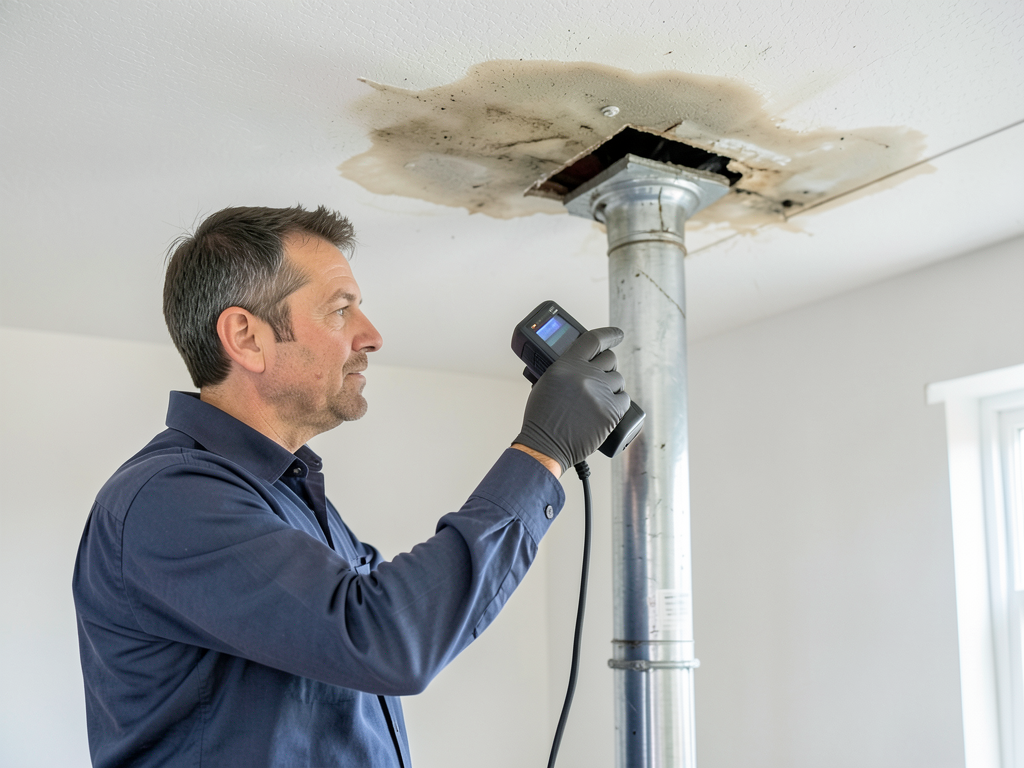
Homeowners often misdiagnose the source of ceiling water. A chimney leak can travel sideways along rafters and appear near a skylight or wall. Professional restoration companies use thermal imaging cameras and moisture meters to create a moisture map of your ceiling and walls. Cleaning up after a kitchen flood in your Fox Chapel home.
Key benefits of professional mapping:
- Identifies hidden moisture pockets behind drywall.
- Determines if mold is present without destructive testing.
- Documents damage for insurance claims under Pennsylvania insurance law.
DIY moisture meters are available but often give false readings on painted surfaces or near metal ductwork.
Immediate steps if you confirm a leak
Found water damage? Take these steps right away:
- Move furniture and valuables away from the affected area.
- Place buckets under active drips to prevent floor damage.
- Turn off ceiling fans to avoid spreading mold spores.
- Call a professional restoration company for emergency water extraction.
Do not wait for the leak to dry on its own. Hidden moisture leads to structural rot and expensive repairs.
Preventing future chimney flashing failures
Once your current leak is fixed, consider these upgrades:
- Replace galvanized steel with copper or stainless steel flashing. These resist corrosion for 50+ years.
- Install a chimney cricket if your chimney is wider than 30 inches.
- Apply a masonry sealant to brick joints every 5 to 7 years.
- Schedule annual roof inspections before winter to catch minor issues.
Regular maintenance costs far less than emergency restoration after a ceiling collapse.
Insurance coverage for chimney leak damage
Most homeowners policies cover sudden water damage from a failed flashing seal. However, they often exclude damage from long-term neglect or lack of maintenance. Document the leak with photos and keep receipts for any emergency repairs.
Pennsylvania insurance companies require proof of mitigation. If you ignore a known leak and it causes more damage, your claim may be denied. Professional restoration companies can provide the documentation insurers need.
Why quick action matters in Pittsburgh
North Side homes are particularly vulnerable because:
- Many were built between 1900 and 1940 with original flashing still in place.
- Roofs often have complex angles that trap snow and ice.
- Older mortar joints are more porous and absorb moisture faster.
Waiting even a few weeks can turn a simple flashing repair into a $10,000+ restoration project. Mold remediation alone averages $2,500 to $7,000 in Allegheny County.
Frequently Asked Questions
How can I tell if my chimney flashing is failing?
Look for rusted metal, cracked sealant, loose counter flashing, or water stains on your ceiling below the chimney. Attic inspection often reveals damp rafters or rusted nails.
Can I repair chimney flashing myself?
Small sealant touch-ups are possible, but proper flashing replacement requires removing shingles and matching the existing roof pitch. Incorrect installation often causes bigger leaks.
How much does professional flashing repair cost in Pittsburgh?
Basic repairs start around $500. Complete flashing replacement with new cricket installation can cost $1,500 to $3,000 depending on chimney size and roof complexity.
Will my insurance cover ceiling damage from a chimney leak?
Policies typically cover sudden, accidental water damage. Long-term neglect or lack of maintenance is usually excluded. Document the damage and contact your insurer promptly.
How long does it take for mold to grow after a leak?
Under ideal conditions, mold can begin growing within 24 to 48 hours of water exposure. Quick drying and professional remediation prevent mold establishment.
Don’t let a small leak become a big problem
A chimney flashing leak might seem minor, but in Pittsburgh’s climate it can destroy your ceiling, attic insulation, and even your home’s structural integrity. The longer you wait, the more expensive the repair becomes.
If you see any of the warning signs described here, call (412) 382-8788 today. Our certified technicians use thermal imaging and moisture mapping to find every drop of water, then restore your home to pre-loss condition. We handle everything from emergency water extraction to complete mold remediation and insurance documentation.
Pick up the phone and call (412) 382-8788 before the next storm hits. Your ceiling will thank you.
{
“@context”: “https://schema.org”,
“@type”: “BlogPosting”,
“headline”: “How to spot chimney flashing leaks before they ruin your North Side ceiling”,
“description”: “Spot chimney flashing leaks early with this North Side Pittsburgh guide. Learn to identify water stains, rust, and attic damage before costly ceiling repairs.”,
“wordCount”: 1438,
“datePublished”: “2026-06-07T10:31:00.000Z”,
“dateModified”: “2026-06-07T10:31:00.000Z”,
“inLanguage”: “en-US”,
“mainEntityOfPage”: {
“@type”: “WebPage”,
“@id”: “https://reliancewaterdamagerestorationpittsburgh.com”
},
“publisher”: {
“@type”: “LocalBusiness”,
“name”: “Reliance Water Damage Restoration Pittsburgh”,
“url”: “https://reliancewaterdamagerestorationpittsburgh.com”
},
“author”: {
“@type”: “Organization”,
“name”: “Reliance Water Damage Restoration Pittsburgh”,
“url”: “https://reliancewaterdamagerestorationpittsburgh.com”
},
“image”: {
“@type”: “ImageObject”,
“url”: “https://reliancewaterdamagerestorationpittsburgh.com/wp-content/uploads/2026/03/how-to-spot-chimney-flashing-leaks-before-they-rui-1.png”
}
}
{
“@context”: “https://schema.org”,
“@type”: “LocalBusiness”,
“name”: “Reliance Water Damage Restoration Pittsburgh”,
“url”: “https://reliancewaterdamagerestorationpittsburgh.com”,
“address”: {
“@type”: “PostalAddress”,
“addressLocality”: “Pittsburgh”
},
“areaServed”: {
“@type”: “City”,
“name”: “Pittsburgh”
}
}
{
“@context”: “https://schema.org”,
“@type”: “FAQPage”,
“mainEntity”: [
{
“@type”: “Question”,
“name”: “How can I tell if my chimney flashing is failing?”,
“acceptedAnswer”: {
“@type”: “Answer”,
“text”: “Look for rusted metal, cracked sealant, loose counter flashing, or water stains on your ceiling below the chimney. Attic inspection often reveals damp rafters or rusted nails.”
}
},
{
“@type”: “Question”,
“name”: “Can I repair chimney flashing myself?”,
“acceptedAnswer”: {
“@type”: “Answer”,
“text”: “Small sealant touch-ups are possible, but proper flashing replacement requires removing shingles and matching the existing roof pitch. Incorrect installation often causes bigger leaks.”
}
},
{
“@type”: “Question”,
“name”: “How much does professional flashing repair cost in Pittsburgh?”,
“acceptedAnswer”: {
“@type”: “Answer”,
“text”: “Basic repairs start around $500. Complete flashing replacement with new cricket installation can cost $1,500 to $3,000 depending on chimney size and roof complexity.”
}
},
{
“@type”: “Question”,
“name”: “Will my insurance cover ceiling damage from a chimney leak?”,
“acceptedAnswer”: {
“@type”: “Answer”,
“text”: “Policies typically cover sudden, accidental water damage. Long-term neglect or lack of maintenance is usually excluded. Document the damage and contact your insurer promptly.”
}
},
{
“@type”: “Question”,
“name”: “How long does it take for mold to grow after a leak?”,
“acceptedAnswer”: {
“@type”: “Answer”,
“text”: “Under ideal conditions, mold can begin growing within 24 to 48 hours of water exposure. Quick drying and professional remediation prevent mold establishment.”
}
}
]
}
{
“@context”: “https://schema.org”,
“@type”: “BreadcrumbList”,
“itemListElement”: [
{
“@type”: “ListItem”,
“position”: 1,
“name”: “Home”,
“item”: “https://reliancewaterdamagerestorationpittsburgh.com”
},
{
“@type”: “ListItem”,
“position”: 2,
“name”: “Blog”,
“item”: “https://reliancewaterdamagerestorationpittsburgh.com/blog”
},
{
“@type”: “ListItem”,
“position”: 3,
“name”: “How to spot chimney flashing leaks before they ruin your North Side ceiling”
}
]
}
{
“@context”: “https://schema.org”,
“@type”: “Service”,
“serviceType”: “Water Damage Restoration”,
“provider”: {
“@type”: “LocalBusiness”,
“name”: “Reliance Water Damage Restoration Pittsburgh”,
“url”: “https://reliancewaterdamagerestorationpittsburgh.com”
},
“areaServed”: {
“@type”: “City”,
“name”: “Pittsburgh”
},
“description”: “Spot chimney flashing leaks early with this North Side Pittsburgh guide. Learn to identify water stains, rust, and attic damage before costly ceiling repairs.”
}