Why Gibsonia roofs are prone to ice dams and how to prevent the indoor leaks they cause
Ice dams form when melting snow refreezes at your roof’s edge, creating a barrier that forces water back under shingles and into your home. In Gibsonia, the combination of heavy lake-effect snow from Lake Erie and Pittsburgh’s notorious freeze-thaw cycles creates perfect conditions for ice dam formation. The problem starts in your attic, where warm air rises and melts the bottom layer of snow on your roof. When this water reaches the cold eave edge, it refreezes, building up layer by layer until water has nowhere to go but under your shingles and into your living space. Who to call for emergency water removal in Pittsburgh right now.
The damage from ice dams can be severe and expensive. Water stains on ceilings, peeling paint, warped hardwood floors, and mold growth in wall cavities are common results. In Gibsonia’s older homes, especially those built before modern building codes required proper attic ventilation, the risk is even higher. The good news is that understanding why ice dams form in our specific climate allows you to take effective steps to prevent them before they cause thousands of dollars in water damage. Expert water damage restoration for businesses in the Pittsburgh Strip District.
Ice dams don’t just happen randomly. They’re the result of specific conditions that are common in Gibsonia and throughout the North Hills area. Your home’s attic temperature, roof design, and even the direction your roof faces all play a role. Homes with complex rooflines, multiple valleys, or those surrounded by trees that block winter sun are particularly vulnerable. The key to prevention is breaking the cycle of melting and refreezing by keeping your roof cold and your attic properly insulated. Why your North Hills basement flooded and how to dry it out fast.
What causes ice dams in Pittsburgh homes
The science behind ice dams starts with heat transfer. Warm air from your living space rises through the ceiling and into the attic through gaps around light fixtures, plumbing vents, and attic hatches. This creates what building scientists call “thermal bridging” – pathways where heat escapes. In Gibsonia’s climate, where winter temperatures frequently swing between 20°F and 40°F, this warm air melts the snow on your roof even when outdoor temperatures are well below freezing.
The problem compounds because Gibsonia sits in a unique microclimate influenced by Lake Erie. The lake effect brings moisture-laden air that dumps heavy, wet snow on our area. This snow is denser and holds more water than the light powder found in other regions, making it more likely to melt and refreeze. When you add Pittsburgh’s freeze-thaw cycles – where daytime temperatures rise above freezing only to plummet again at night – you get the perfect recipe for ice dam formation.
Roof design plays a crucial role too. Homes with complex rooflines, dormers, or valleys create areas where snow can accumulate and where heat pockets form. The south-facing slopes of Gibsonia homes might get some sun during the day, but north-facing slopes remain in shadow, creating temperature differentials across the same roof. This uneven heating accelerates the ice dam cycle, with water running down from warm areas only to freeze in the colder spots.
Attic bypasses are often the hidden culprits. These are gaps in your home’s thermal envelope that allow warm air to escape into the attic. Common bypasses include bathroom exhaust fans that terminate in the attic instead of outside, recessed light fixtures that aren’t sealed, and poorly insulated attic hatches. In Gibsonia’s older homes, these bypasses are especially problematic because they weren’t designed with modern energy efficiency standards in mind.
The high cost of neglect water damage and structural risks
When ice dams cause water to back up under your shingles, the damage happens fast and often invisibly. Within 24 to 48 hours, moisture trapped in your attic insulation creates ideal conditions for mold growth. Black mold can spread through wall cavities and ceiling spaces, releasing spores that affect indoor air quality and pose health risks, especially for children and those with respiratory conditions.
The structural damage from ice dam leaks extends far beyond water stains. Roof decking can rot when exposed to prolonged moisture, compromising your roof’s structural integrity. Wet insulation loses its R-value, meaning your heating bills will spike as your HVAC system works harder to maintain comfortable temperatures. In severe cases, ceiling drywall can collapse under the weight of absorbed water, creating dangerous conditions and requiring extensive repairs. EPA mold information.
Electrical systems are particularly vulnerable to water damage from ice dams. Water that travels down walls can reach electrical outlets, light fixtures, and junction boxes, creating shock hazards and fire risks. In Gibsonia’s older homes with original wiring, this risk is amplified because the wiring may not meet current safety standards. A single ice dam leak can necessitate rewiring entire circuits to ensure safe operation.
The cost of repairing ice dam damage often exceeds the cost of prevention by a factor of ten or more. A typical ice dam removal service might cost $300 to $600, while repairing water-damaged ceilings, walls, and floors can run $5,000 to $15,000 or more. Add in the cost of mold remediation, which can range from $2,000 to $6,000 depending on the extent, and the financial impact becomes clear. Prevention isn’t just smart – it’s economically essential for Gibsonia homeowners.
Short term prevention immediate steps for homeowners
When you see icicles forming along your roof edge, you need to act quickly to prevent water from backing up under your shingles. The safest immediate step is using a roof rake to remove snow from the bottom three to four feet of your roof edge. This breaks the ice dam cycle by eliminating the snow that would otherwise melt and refreeze. Work from the ground using an extendable roof rake with a plastic or foam head to avoid damaging shingles.
Calcium chloride ice melt can provide temporary relief when applied correctly. Fill a nylon stocking with calcium chloride pellets and lay it perpendicular across the ice dam, positioning it so it hangs slightly over the gutter. This creates channels for water to drain rather than backing up under shingles. Never use rock salt or sodium chloride – these products can damage shingles, kill plants, and corrode metal gutters. The calcium chloride method is slower but much safer for your roof and landscaping.
Gutter maintenance is critical for ice dam prevention. Clean gutters in late fall after all leaves have fallen but before the first heavy snow. Clogged gutters prevent proper drainage and create areas where ice can build up. Consider installing gutter guards designed for winter conditions – these allow water to flow while preventing debris accumulation that leads to ice formation. In Gibsonia’s climate, where autumn leaves mix with early winter snow, clean gutters are your first line of defense. Cleaning up after a kitchen flood in your Fox Chapel home.
Heat cables can provide emergency relief in problem areas, but they’re a band-aid solution rather than prevention. Install heat cables in a zigzag pattern along the roof edge and in gutters where ice typically forms. Plug them in only during active melting conditions – running them continuously wastes electricity and can create new problems by melting snow that then refreezes in unwanted areas. For Gibsonia homeowners dealing with persistent ice dams, heat cables buy time while you implement longer-term solutions. Dealing with a flooded basement in Mount Lebanon without losing your mind.
Long term solutions the cold roof strategy
The most effective long term solution to ice dams is creating what building scientists call a “cold roof” – an attic space that stays close to the outdoor temperature. This starts with proper insulation. In Pennsylvania’s climate zone 5, building codes require R-49 to R-60 insulation in attic floors. This means installing 15 to 20 inches of blown-in cellulose or fiberglass, depending on the material’s R-value per inch. The goal is to keep warm air in your living space where it belongs, not letting it rise to heat your roof.
Air sealing is just as important as insulation. Use spray foam or caulk to seal gaps around chimney chases, plumbing vents, electrical penetrations, and recessed light fixtures. Pay special attention to the attic hatch – install weatherstripping around the perimeter and add insulation to the hatch cover itself. In Gibsonia’s older homes, these air sealing measures can reduce heat loss by 30% or more, dramatically reducing the conditions that cause ice dams.
Proper attic ventilation works with insulation to maintain cold roof temperatures. The general rule is one square foot of net free ventilation area for every 300 square feet of attic floor space, split evenly between soffit vents and ridge vents. Soffit vents allow cool air to enter at the eaves while ridge vents let warm air escape at the peak. This continuous airflow keeps the entire attic space at a uniform temperature, preventing the hot spots that melt snow.
Consider installing an ice and water shield membrane when replacing your roof. This self-adhering waterproof underlayment installs along eaves, valleys, and around penetrations where ice dams typically form. While building codes in Pennsylvania require ice and water shield only in specific climate zones, Gibsonia’s heavy snowfall and freeze-thaw cycles make it a wise investment regardless of code requirements. The membrane provides a secondary barrier that prevents water from penetrating even if ice dams do form.
Professional ice dam removal vs DIY
Many homeowners attempt to remove ice dams themselves using hammers, chisels, or pressure washers, but these methods often cause more damage than the ice dams themselves. Striking ice with tools can shatter shingles, tear off flashing, and create holes in your roof that lead to leaks long after winter ends. Pressure washers might seem effective, but the high-pressure water can force its way under shingles and into your home, causing the exact problem you’re trying to prevent.
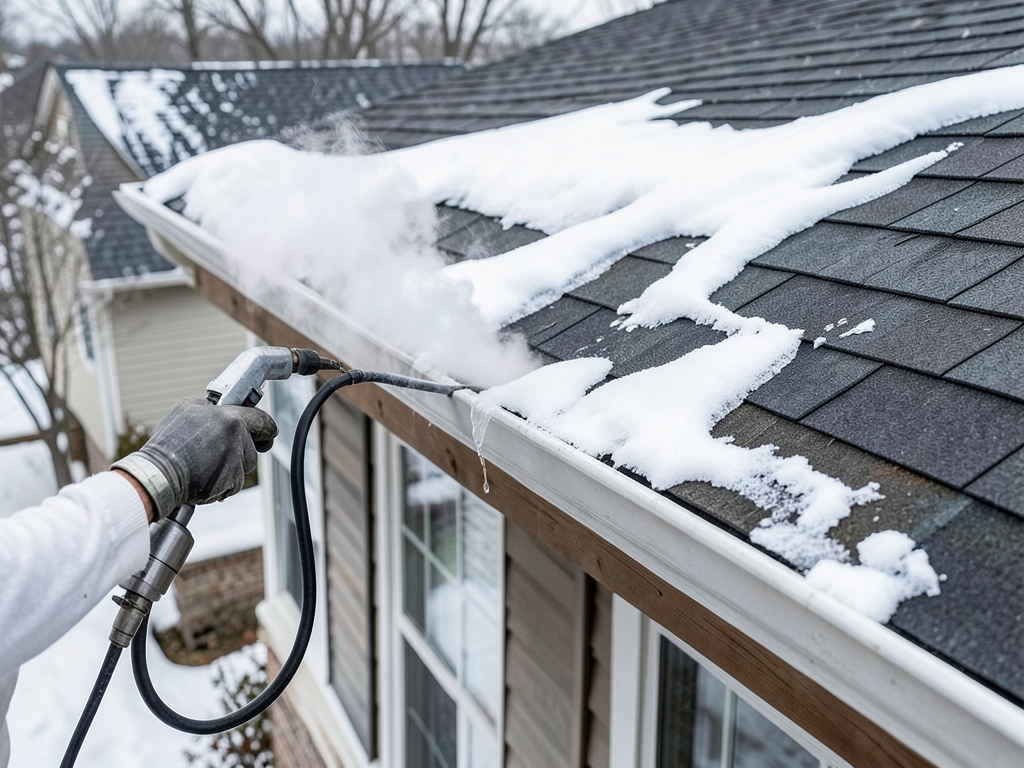
Professional ice dam removal uses low-pressure steam systems specifically designed for this purpose. These commercial steamers heat water to create steam at temperatures around 300°F, which quickly cuts through ice without damaging roofing materials. The low pressure – typically under 300 PSI – means the steam melts ice rather than blasting it away. This method is more expensive than DIY approaches, but it protects your roof investment and ensures the job is done safely.
The timing of professional ice dam removal matters significantly. Waiting until water is actively leaking into your home means you’re already dealing with damage. Professional services can often prevent leaks by removing ice dams early in their formation. Many Gibsonia roofing contractors offer 24/7 emergency ice dam removal during winter months, recognizing that water damage doesn’t wait for business hours. The cost of emergency service is typically 50% to 100% higher than scheduled removal, making prevention even more cost-effective.
When hiring professionals, verify they carry proper insurance and have experience with ice dam removal specifically. Ask about their equipment – true low-pressure steamers are different from hot water pressure washers that some contractors mistakenly use. Get a written estimate that includes protection for your landscaping and cleanup of ice chunks. Professional ice dam removal should leave your roof in better condition than when they arrived, not create new problems that show up when the snow melts.
Emergency water damage restoration in Pittsburgh
When ice dams cause water to leak into your Gibsonia home, fast action prevents minor damage from becoming a major restoration project. The first 24 hours are critical – water spreads through porous materials like drywall, insulation, and hardwood flooring, creating ideal conditions for mold growth. Professional water damage restoration teams use moisture meters to detect hidden water in wall cavities and under flooring, areas you can’t see but where damage continues to worsen.
Professional restoration follows industry standards set by the IICRC S500, which outlines specific procedures for water damage mitigation. This includes water extraction using commercial-grade equipment, removal of damaged materials that can’t be salvaged, and structural drying using industrial air movers and dehumidifiers. In Gibsonia’s climate, where winter humidity is already low, professional drying can often prevent the secondary damage that occurs when homeowners attempt DIY water removal.
Insurance coverage for ice dam damage varies by policy, but most standard homeowners insurance policies cover sudden and accidental water damage from ice dams. The key is documenting the damage quickly and accurately. Professional restoration companies work directly with insurance adjusters, providing detailed documentation of damage extent, moisture readings, and restoration plans. This expertise often results in faster claim approval and ensures you receive proper compensation for all necessary repairs.
The restoration process typically takes 3 to 7 days for minor to moderate ice dam damage, though severe cases can extend to several weeks. During this time, containment barriers prevent mold spores from spreading to unaffected areas of your home. Air scrubbers with HEPA filtration remove airborne contaminants, and antimicrobial treatments prevent mold growth in treated areas. Professional restoration isn’t just about removing water – it’s about ensuring your home returns to a safe, healthy condition.
Don’t wait until water is dripping through your ceiling to call for help. If you notice large icicles forming, water stains appearing on ceilings or walls, or hear dripping sounds in your walls during winter, these are warning signs that ice dams are already causing damage. Call (412) 382-8788 today to schedule your inspection. Our team understands Gibsonia’s unique climate challenges and can help you prevent ice dam damage before it starts, saving you thousands in potential repair costs.
Frequently Asked Questions
How do I know if I have ice dams forming on my roof?
The most obvious sign is large icicles hanging from your roof edge, but other indicators include water stains on interior ceilings or walls, especially after snowfall. You might also notice snow melting unevenly on your roof, with bare spots appearing while snow remains in shaded areas. If you see any of these signs during winter, ice dams are likely forming and causing potential damage.
Can I prevent ice dams without replacing my roof?
Yes, many effective prevention methods don’t require roof replacement. Improving attic insulation to R-49 to R-60, sealing air leaks, and ensuring proper ventilation can dramatically reduce ice dam formation. These improvements address the root cause – heat escaping into your attic – rather than just treating the symptoms. For many Gibsonia homeowners, these upgrades provide complete protection against ice dams.
How much does professional ice dam removal cost in Pittsburgh?
Professional ice dam removal typically costs $300 to $600 for an average home, though prices vary based on roof size, ice dam severity, and accessibility. Emergency services during active leaks cost more, often 50% to 100% higher than scheduled removal. While this might seem expensive, it’s far less costly than repairing water damage, which can run thousands of dollars.
Will my homeowners insurance cover ice dam damage?
Most standard homeowners insurance policies cover sudden and accidental water damage from ice dams, but coverage details vary by policy. Damage from poor maintenance or pre-existing conditions might not be covered. It’s best to review your policy and consider having a professional inspection to identify and address ice dam risks before they cause damage that could lead to claim denial.
How long does it take for mold to grow after water damage from ice dams?
Mold can begin growing within 24 to 48 hours after water exposure, especially in dark, warm areas like wall cavities and attics. This is why fast water removal and proper drying are critical. Professional restoration teams use moisture meters and thermal imaging to detect hidden water and ensure complete drying, preventing mold growth that could cause health issues and additional damage. For more information, visit Department of Energy insulation guidelines.
{
“@context”: “https://schema.org”,
“@type”: “BlogPosting”,
“headline”: “Why Gibsonia roofs are prone to ice dams and how to prevent the indoor leaks they cause”,
“description”: “Gibsonia homes face unique ice dam risks due to Pittsburgh’s freeze-thaw cycles. Learn why ice dams form and how to stop them from causing costly indoor water damage.”,
“wordCount”: 2641,
“datePublished”: “2026-03-25T08:20:00.000Z”,
“dateModified”: “2026-03-25T08:20:00.000Z”,
“inLanguage”: “en-US”,
“mainEntityOfPage”: {
“@type”: “WebPage”,
“@id”: “https://reliancewaterdamagerestorationpittsburgh.com”
},
“publisher”: {
“@type”: “LocalBusiness”,
“name”: “Reliance Water Damage Restoration Pittsburgh”,
“url”: “https://reliancewaterdamagerestorationpittsburgh.com”
},
“author”: {
“@type”: “Organization”,
“name”: “Reliance Water Damage Restoration Pittsburgh”,
“url”: “https://reliancewaterdamagerestorationpittsburgh.com”
},
“image”: {
“@type”: “ImageObject”,
“url”: “https://reliancewaterdamagerestorationpittsburgh.com/wp-content/uploads/2026/03/why-gibsonia-roofs-are-prone-to-ice-dams-and-how-t-1.png”
}
}
{
“@context”: “https://schema.org”,
“@type”: “LocalBusiness”,
“name”: “Reliance Water Damage Restoration Pittsburgh”,
“url”: “https://reliancewaterdamagerestorationpittsburgh.com”,
“address”: {
“@type”: “PostalAddress”,
“addressLocality”: “Pittsburgh”
},
“areaServed”: {
“@type”: “City”,
“name”: “Pittsburgh”
}
}
{
“@context”: “https://schema.org”,
“@type”: “FAQPage”,
“mainEntity”: [
{
“@type”: “Question”,
“name”: “How do I know if I have ice dams forming on my roof?”,
“acceptedAnswer”: {
“@type”: “Answer”,
“text”: “The most obvious sign is large icicles hanging from your roof edge, but other indicators include water stains on interior ceilings or walls, especially after snowfall. You might also notice snow melting unevenly on your roof, with bare spots appearing while snow remains in shaded areas. If you see any of these signs during winter, ice dams are likely forming and causing potential damage.”
}
},
{
“@type”: “Question”,
“name”: “Can I prevent ice dams without replacing my roof?”,
“acceptedAnswer”: {
“@type”: “Answer”,
“text”: “Yes, many effective prevention methods don’t require roof replacement. Improving attic insulation to R-49 to R-60, sealing air leaks, and ensuring proper ventilation can dramatically reduce ice dam formation. These improvements address the root cause – heat escaping into your attic – rather than just treating the symptoms. For many Gibsonia homeowners, these upgrades provide complete protection against ice dams.”
}
},
{
“@type”: “Question”,
“name”: “How much does professional ice dam removal cost in Pittsburgh?”,
“acceptedAnswer”: {
“@type”: “Answer”,
“text”: “Professional ice dam removal typically costs $300 to $600 for an average home, though prices vary based on roof size, ice dam severity, and accessibility. Emergency services during active leaks cost more, often 50% to 100% higher than scheduled removal. While this might seem expensive, it’s far less costly than repairing water damage, which can run thousands of dollars.”
}
},
{
“@type”: “Question”,
“name”: “Will my homeowners insurance cover ice dam damage?”,
“acceptedAnswer”: {
“@type”: “Answer”,
“text”: “Most standard homeowners insurance policies cover sudden and accidental water damage from ice dams, but coverage details vary by policy. Damage from poor maintenance or pre-existing conditions might not be covered. It’s best to review your policy and consider having a professional inspection to identify and address ice dam risks before they cause damage that could lead to claim denial.”
}
},
{
“@type”: “Question”,
“name”: “How long does it take for mold to grow after water damage from ice dams?”,
“acceptedAnswer”: {
“@type”: “Answer”,
“text”: “Mold can begin growing within 24 to 48 hours after water exposure, especially in dark, warm areas like wall cavities and attics. This is why fast water removal and proper drying are critical. Professional restoration teams use moisture meters and thermal imaging to detect hidden water and ensure complete drying, preventing mold growth that could cause health issues and additional damage. For more information, visit Department of Energy insulation guidelines.”
}
}
]
}
{
“@context”: “https://schema.org”,
“@type”: “BreadcrumbList”,
“itemListElement”: [
{
“@type”: “ListItem”,
“position”: 1,
“name”: “Home”,
“item”: “https://reliancewaterdamagerestorationpittsburgh.com”
},
{
“@type”: “ListItem”,
“position”: 2,
“name”: “Blog”,
“item”: “https://reliancewaterdamagerestorationpittsburgh.com/blog”
},
{
“@type”: “ListItem”,
“position”: 3,
“name”: “Why Gibsonia roofs are prone to ice dams and how to prevent the indoor leaks they cause”
}
]
}
{
“@context”: “https://schema.org”,
“@type”: “Service”,
“serviceType”: “Water Damage Restoration”,
“provider”: {
“@type”: “LocalBusiness”,
“name”: “Reliance Water Damage Restoration Pittsburgh”,
“url”: “https://reliancewaterdamagerestorationpittsburgh.com”
},
“areaServed”: {
“@type”: “City”,
“name”: “Pittsburgh”
},
“description”: “Gibsonia homes face unique ice dam risks due to Pittsburgh’s freeze-thaw cycles. Learn why ice dams form and how to stop them from causing costly indoor water damage.”
}