Signs of hidden mold behind your Shaler Township drywall
If you notice a persistent musty odor in your Shaler Township home, especially in the basement or along exterior walls, you might have mold growing behind your drywall. This issue is particularly common in older Pittsburgh-area homes where moisture from heavy clay soil and freeze-thaw cycles can seep through foundations and create perfect conditions for mold growth inside wall cavities.. Read more about How to spot structural wood rot in older Wilkinsburg properties.
Hidden mold often starts after water damage from plumbing leaks, roof leaks, or high humidity levels common during Pittsburgh summers. The problem can spread quickly through porous drywall and insulation before you ever see visible signs on the surface. Early detection is critical because once mold establishes itself behind walls, it can cause structural damage and serious health issues for your family. Who to call for emergency water removal in Pittsburgh right now.
Musty odors and basement smell
The first sign of hidden mold is often a distinctive musty smell that lingers even after cleaning. This odor comes from microbial volatile organic compounds released by active mold colonies. In Shaler Township homes, this smell is particularly common in finished basements where moisture from the surrounding clay soil creates high humidity levels. Cleaning up after a kitchen flood in your Fox Chapel home.
Pay attention to whether the smell intensifies when your HVAC system runs. Mold spores can circulate through ductwork, spreading the odor throughout your home. The smell might be stronger near plumbing fixtures or along exterior walls where temperature differences create condensation.
Discoloration and water staining
Look for yellow, brown, or gray stains on your drywall that appear darker than the surrounding area. These water stains often indicate past moisture problems that could have allowed mold to establish itself. In Shaler Township’s older homes, these stains frequently appear near windows, doors, or along foundation walls where moisture intrusion is common. Expert water damage restoration for businesses in the Pittsburgh Strip District.
Check for bubbling or warping of paint and wallpaper. When drywall absorbs moisture, it expands and causes surface materials to separate. This creates perfect conditions for mold growth between the wall surface and the drywall itself. EPA Mold Resources.
Peeling or bubbling wallpaper and paint
When moisture gets trapped behind wall coverings, it causes them to lose adhesion. You might notice wallpaper peeling away from corners or paint bubbling up in random patterns. This happens because water breaks down the adhesive properties of both materials, creating pockets where mold can thrive undetected.
In Shaler Township homes with plaster over lath construction, you might see similar bubbling effects where the plaster separates from the underlying structure due to moisture damage.
Health symptoms and indoor air quality
Hidden mold can cause various health issues that seem unrelated at first. Common symptoms include persistent coughing, sneezing, itchy eyes, and respiratory problems that worsen when you’re at home. Some people experience headaches, fatigue, or skin irritation that improves when they leave the house. Black Mold Symptoms.
Certain mold species, particularly Stachybotrys chartarum (commonly called black mold), produce mycotoxins that can cause more severe reactions. If multiple family members experience similar symptoms that improve when away from home, hidden mold should be suspected.
Advanced detection: thermal imaging and moisture meters
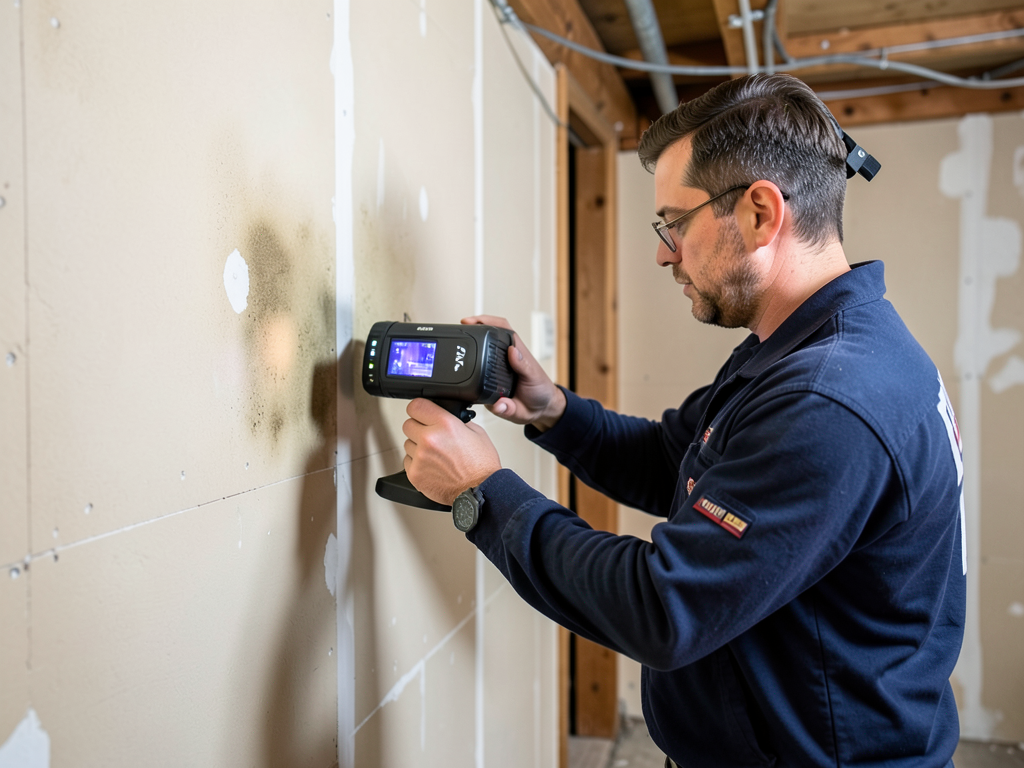
Professional mold inspectors use thermal imaging cameras to detect temperature differences behind walls that indicate moisture problems. These FLIR cameras can identify cold spots where water is present, even when the surface looks dry. This non-invasive technology allows technicians to locate problem areas without cutting into walls.
Moisture meters measure the moisture content in building materials. Readings above 15% in drywall or wood indicate conditions suitable for mold growth. Professional-grade meters can detect moisture at different depths, helping identify whether the problem is surface-level or has penetrated deeper into wall cavities.
Why Shaler Township homes are prone to drywall mold
Shaler Township’s location in Allegheny County creates unique challenges for homeowners. The area’s heavy clay soil retains water and creates high hydrostatic pressure against foundation walls. During Pittsburgh’s freeze-thaw cycles, this pressure can cause small cracks that allow moisture to enter wall cavities.
Many Shaler homes were built between 1950 and 1980 with construction methods that didn’t account for modern moisture management standards. These homes often lack proper vapor barriers and have older plumbing systems more prone to leaks. The combination of aging infrastructure and our region’s climate creates ideal conditions for hidden mold growth.. Read more about When an AC condensate line leaks in your Green Tree condo.
The 3-step DIY inspection process
While professional inspection is recommended for confirmation, you can perform a basic check to identify potential problem areas. Start by examining areas where water damage is most likely: near plumbing fixtures, along exterior walls, and in basements or crawl spaces.. Read more about The right way to manage basement humidity in Bloomfield rentals during the summer.
Look for soft spots by gently pressing on suspicious areas of drywall. If the surface feels spongy or gives under light pressure, moisture has likely compromised the material. Check for warping or bulging that indicates expansion from water absorption.
Use your sense of smell to identify musty areas. Walk through your home and note any locations where the odor seems stronger. Pay special attention to areas near water sources or where humidity tends to accumulate.
Relative humidity levels in Western Pennsylvania
Western Pennsylvania’s climate creates conditions that promote mold growth year-round. Summer humidity often exceeds 80%, while winter brings condensation from temperature differentials between heated interiors and cold exteriors. These conditions make it essential to maintain indoor humidity between 30% and 50% to prevent mold problems.
Shaler Township’s proximity to Pine Creek and its surrounding wooded areas can create microclimates with even higher humidity levels than surrounding areas. Homes near these natural moisture sources may require additional dehumidification or ventilation to prevent mold growth.
Moisture mapping techniques
Professional moisture mapping involves creating a detailed diagram of water intrusion patterns throughout a structure. Technicians use moisture meters at regular intervals to create a grid showing where elevated moisture levels exist. This mapping helps identify the source of water intrusion and the extent of damage.
The process typically starts with a visual inspection, followed by systematic moisture readings at one-foot intervals along walls and floors. Areas showing elevated readings are then tested at multiple depths to determine how far the moisture has penetrated building materials.
Professional mold testing vs. DIY kits
DIY mold test kits are available at hardware stores, but they have significant limitations. These kits typically only tell you whether mold spores are present in the air, not whether they’re actively growing behind walls or what type of mold you’re dealing with. They also cannot identify the source of moisture that’s allowing mold to grow. Dealing with a flooded basement in Mount Lebanon without losing your mind.
Professional testing involves air sampling, surface sampling, and bulk material testing. Results are analyzed in laboratories and compared against established standards for indoor air quality. Professionals can also perform culture tests to identify specific mold species and determine whether they’re actively growing or just dormant spores.
Allegheny County health guidelines
According to Allegheny County Health Department guidelines, any visible mold growth covering more than 10 square feet requires professional remediation. For smaller areas, homeowners can attempt cleaning with proper safety equipment, but the underlying moisture problem must be addressed to prevent recurrence.
The county recommends using EPA-registered fungicides for cleaning and emphasizes the importance of proper containment during remediation to prevent spreading mold spores to unaffected areas. All remediation work should follow IICRC S520 standards for mold remediation. IICRC S520 Mold Remediation Standard.
When to call a Shaler professional
If you notice any combination of the warning signs mentioned above, it’s time to call a professional. The EPA recommends professional assessment when you see visible mold growth, smell persistent musty odors, or have experienced recent water damage. Professional inspection becomes urgent if family members experience unexplained health issues that improve when away from home.
Professional remediation is necessary when mold covers large areas, when it’s growing in HVAC systems, or when the source of moisture cannot be identified and corrected. Licensed professionals have the equipment and training to safely remove mold and prevent its return.
Health risks and EPA guidelines
The EPA’s guidelines for mold remediation emphasize that all mold should be treated as potentially hazardous. While not all molds produce mycotoxins, the health risks associated with mold exposure include respiratory problems, allergic reactions, and in some cases, more serious conditions for people with compromised immune systems.
The agency recommends that anyone cleaning mold wear N-95 respirators, gloves, and eye protection. For areas larger than 10 square feet, they advise hiring professionals who can implement proper containment procedures to prevent cross-contamination.
Cost factors for professional inspection
Professional mold inspection costs in Shaler Township typically range from $300 to $600 for a standard home inspection. This includes visual assessment, moisture readings, and basic air sampling. More comprehensive testing with thermal imaging and laboratory analysis can cost $800 to $1,500.
The cost varies based on home size, the extent of suspected damage, and the complexity of the inspection needed. Homes with multiple levels, finished basements, or complex HVAC systems may require more extensive testing, increasing the overall cost.
Preventing future mold growth
Prevention focuses on controlling moisture and maintaining proper ventilation. Install dehumidifiers in basements and crawl spaces to keep humidity below 50%. Ensure your home’s grading directs water away from foundation walls, and clean gutters regularly to prevent water from backing up against your home.
Fix plumbing leaks immediately and inspect your roof annually for damage. Consider installing exhaust fans in bathrooms and kitchens to remove moisture at the source. Regular HVAC maintenance, including duct cleaning, can prevent mold from establishing itself in your ventilation system.
Shaler Township emergency response
When you discover mold or water damage in your Shaler Township home, quick action is essential. The area’s clay soil and aging infrastructure mean that water problems can escalate rapidly. Professional restoration services in Shaler typically offer 24/7 emergency response with arrival times under two hours for urgent situations.
During the initial response, technicians will assess the extent of damage, identify the moisture source, and implement temporary measures to prevent further damage. This might include water extraction, dehumidification, or temporary repairs to stop active leaks.
Insurance considerations
Most homeowner insurance policies cover sudden and accidental water damage but may exclude long-term moisture problems or flooding. Document all damage with photos and videos before beginning cleanup. Keep receipts for any emergency services or repairs, as these may be needed for insurance claims.
Check your policy for specific coverage details regarding mold remediation. Some policies have separate mold coverage limits, while others exclude mold damage entirely unless it results from a covered water damage event.
Professional remediation process
Professional mold remediation follows a systematic process. First, technicians establish containment areas using plastic sheeting and negative air pressure to prevent spore spread. They then remove contaminated materials, clean affected surfaces with EPA-registered fungicides, and use HEPA filtration to remove airborne spores.
After cleaning, the area is dried thoroughly using commercial dehumidifiers and air movers. Technicians then conduct clearance testing to ensure the mold has been successfully removed and that moisture levels have returned to normal ranges.
Building code compliance
Pennsylvania’s Uniform Construction Code requires that all remediation work meet specific standards for moisture management and material replacement. This includes using mold-resistant materials in areas prone to moisture and ensuring proper ventilation in bathrooms, kitchens, and laundry areas.
Local building departments in Allegheny County may require permits for extensive remediation work, particularly when it involves structural modifications or electrical and plumbing repairs. Always verify that your remediation contractor is familiar with local code requirements.
Long-term monitoring
After remediation, implement a monitoring plan to catch any recurrence early. This might include regular visual inspections of problem areas, periodic moisture readings, and maintaining indoor humidity within recommended ranges. Consider installing moisture sensors in areas prone to water damage for early warning of problems.
Annual professional inspections can identify potential issues before they become major problems. These inspections should include checking for plumbing leaks, roof damage, and proper drainage around your home’s foundation.
Choosing the right professional
When selecting a mold remediation professional in Shaler Township, verify their certifications and insurance coverage. Look for technicians certified by the IICRC in mold remediation and water damage restoration. Check online reviews and ask for references from previous customers in the Shaler area.
Reputable companies will provide detailed written estimates, explain their remediation process clearly, and offer warranties on their work. They should also be willing to work with your insurance company and provide documentation needed for claims processing.
Frequently Asked Questions
How can I tell if mold is behind my drywall without cutting it open?
Look for signs like musty odors, water stains, bubbling paint, or warped surfaces. Professional thermal imaging and moisture meters can detect moisture problems behind walls without destructive testing. If you notice these warning signs, professional inspection is recommended.
Is mold behind drywall dangerous to my health?
Yes, hidden mold can cause various health issues including respiratory problems, allergic reactions, and other symptoms. Some mold species produce mycotoxins that can cause more severe reactions. The health risks increase with exposure time and the type of mold present.
How much does professional mold inspection cost in Shaler Township?
Professional mold inspection in Shaler Township typically costs between $300 and $600 for basic inspection, with comprehensive testing ranging from $800 to $1,500. The exact cost depends on home size, suspected damage extent, and testing complexity required.
Call (412) 382-8788 today to schedule your inspection
Don’t wait until hidden mold causes serious damage to your Shaler Township home. Our certified technicians use advanced thermal imaging and moisture detection equipment to identify problems quickly and accurately. We understand the unique challenges that Pittsburgh-area homes face with our climate and soil conditions.
Pick up the phone and call (412) 382-8788 before the next storm hits. Early detection can save you thousands in structural repairs and protect your family’s health. Our team is ready to respond 24/7 to your mold concerns.
You may also find this helpful. The real cost of waiting to fix a slow dishwasher leak in your Dormont home.
You may also find this helpful. Why your Penn Hills attic has mold even when the roof isn’t leaking.
You may also find this helpful. Is your Forest Hills ceiling leak actually coming from a chimney gap?.
You may also find this helpful. What every Brookline homebuyer needs to check for water damage before closing.
{
“@context”: “https://schema.org”,
“@type”: “BlogPosting”,
“headline”: “Signs of hidden mold behind your Shaler Township drywall”,
“description”: “Learn how to spot hidden mold behind drywall in Shaler homes. Get expert detection tips and local remediation services from Reliance Water Damage Restoration.”,
“wordCount”: 2329,
“datePublished”: “2026-03-14T12:31:00.000Z”,
“dateModified”: “2026-03-14T12:31:00.000Z”,
“inLanguage”: “en-US”,
“mainEntityOfPage”: {
“@type”: “WebPage”,
“@id”: “https://reliancewaterdamagerestorationpittsburgh.com”
},
“publisher”: {
“@type”: “LocalBusiness”,
“name”: “Reliance Water Damage Restoration Pittsburgh”,
“url”: “https://reliancewaterdamagerestorationpittsburgh.com”
},
“author”: {
“@type”: “Organization”,
“name”: “Reliance Water Damage Restoration Pittsburgh”,
“url”: “https://reliancewaterdamagerestorationpittsburgh.com”
},
“image”: {
“@type”: “ImageObject”,
“url”: “https://reliancewaterdamagerestorationpittsburgh.com/wp-content/uploads/2026/03/signs-of-hidden-mold-behind-your-shaler-township-d-1.png”
}
}
{
“@context”: “https://schema.org”,
“@type”: “LocalBusiness”,
“name”: “Reliance Water Damage Restoration Pittsburgh”,
“url”: “https://reliancewaterdamagerestorationpittsburgh.com”,
“address”: {
“@type”: “PostalAddress”,
“addressLocality”: “Pittsburgh”
},
“areaServed”: {
“@type”: “City”,
“name”: “Pittsburgh”
}
}
{
“@context”: “https://schema.org”,
“@type”: “FAQPage”,
“mainEntity”: [
{
“@type”: “Question”,
“name”: “How can I tell if mold is behind my drywall without cutting it open?”,
“acceptedAnswer”: {
“@type”: “Answer”,
“text”: “Look for signs like musty odors, water stains, bubbling paint, or warped surfaces. Professional thermal imaging and moisture meters can detect moisture problems behind walls without destructive testing. If you notice these warning signs, professional inspection is recommended.”
}
},
{
“@type”: “Question”,
“name”: “Is mold behind drywall dangerous to my health?”,
“acceptedAnswer”: {
“@type”: “Answer”,
“text”: “Yes, hidden mold can cause various health issues including respiratory problems, allergic reactions, and other symptoms. Some mold species produce mycotoxins that can cause more severe reactions. The health risks increase with exposure time and the type of mold present.”
}
},
{
“@type”: “Question”,
“name”: “How much does professional mold inspection cost in Shaler Township?”,
“acceptedAnswer”: {
“@type”: “Answer”,
“text”: “Professional mold inspection in Shaler Township typically costs between $300 and $600 for basic inspection, with comprehensive testing ranging from $800 to $1,500. The exact cost depends on home size, suspected damage extent, and testing complexity required.”
}
}
]
}
{
“@context”: “https://schema.org”,
“@type”: “BreadcrumbList”,
“itemListElement”: [
{
“@type”: “ListItem”,
“position”: 1,
“name”: “Home”,
“item”: “https://reliancewaterdamagerestorationpittsburgh.com”
},
{
“@type”: “ListItem”,
“position”: 2,
“name”: “Blog”,
“item”: “https://reliancewaterdamagerestorationpittsburgh.com/blog”
},
{
“@type”: “ListItem”,
“position”: 3,
“name”: “Signs of hidden mold behind your Shaler Township drywall”
}
]
}
{
“@context”: “https://schema.org”,
“@type”: “Service”,
“serviceType”: “Water Damage Restoration”,
“provider”: {
“@type”: “LocalBusiness”,
“name”: “Reliance Water Damage Restoration Pittsburgh”,
“url”: “https://reliancewaterdamagerestorationpittsburgh.com”
},
“areaServed”: {
“@type”: “City”,
“name”: “Pittsburgh”
},
“description”: “Learn how to spot hidden mold behind drywall in Shaler homes. Get expert detection tips and local remediation services from Reliance Water Damage Restoration.”
}